Blog Archive

Followers

Come Reason's Apologetics Notes blog will highlight various news stories or current events and seek to explore them from a thoughtful Christian perspective. Less formal and shorter than the www.comereason.org Web site articles, we hope to give readers points to reflect on concerning topics of the day.

Powered by Blogger.

Thursday, July 17, 2014

Investigating the Truth of the Gospel Eyewitnesses

Yesterday, I was able to talk with a room full of middle-schoolers at Magnolia Church who were investigating the claims of Jesus' death and resurrection. Their mission was to critically examine the gospel accounts and see what evidence they could find to determine the truth value of the accounts.


As any good investigator would, one should start an investigation into the truth with the earliest eyewitness accounts. The gospel of Mark is held by most scholars as the first of the four to be written, probably between the mid to late 50's, then Matthew and Luke were composed in the 60's, with John written last in the 90's1. So, while John was written some 50-60 years after Jesus' crucifixion, Mark closes that gap by 40 years, being composed within a couple of decades after Jesus' death. While skeptics try to make a big deal out of the gospels being written decades after the events, this is actually a boon for those who study ancient history. But many cultures who even today rely on the spoken word rather than the written word would never see this as a problem, as several scholars state.

An Insult Offers an Insight

One of the primary objections to the Gospel accounts is that the passion story was made up after the fact in order to launch the newly-formed Christian religion. Joe L. Watts, for example, believes that the Gospel writers "'creatively' expanded the original story of Jesus to speak to their current social problems."2 However, as good investigators there are ways we can study the text to see if there are any clues that lead us to such a conclusion.

One such clue is found in the taunts that Mark said were thrown at Jesus while He hung on the cross. In Mark 15:27-32 we read:

And with him they crucified two robbers, one on his right and one on his left. And those who passed by derided him, wagging their heads and saying, "Aha! You who would destroy the temple and rebuild it in three days, save yourself, and come down from the cross!" So also the chief priests with the scribes mocked him to one another, saying, "He saved others; he cannot save himself. Let the Christ, the King of Israel, come down now from the cross that we may see and believe." Those who were crucified with him also reviled him.

Here, we have a supposed eyewitness account of the events around Jesus' crucifixion.  The mocking particularly is significant. While John's account doesn't mention it, both Matthew and Luke record the mocking of the chief priests and scribes. But only Mark's gospel includes that passersby said a very specific thing to him: "Aha! You who would destroy the temple and rebuild it in three days, save yourself, and come down from the cross!" Why is that significant? It is simply because nowhere in the gospel of Mark does Jesus ever claim that he would destroy the temple and rebuild it. That story isn't found until John's gospel is written some forty years later!

Corroborating Testimony

If Mark wasn't reporting eyewitness testimony, if he was inventing or expanding the story of Jesus' crucifixion, then why would he include this taunt, but provide no explanation for it and no back story? Someone creating a fictional account wouldn't make such a boast come out of the mouth of Jesus, because by itself it looks as if Jesus failed at that claim. The temple wasn't destroyed at all. Only some 60 years later, in John chapter 2 do we understand what Jesus meant by his prediction. "But he was speaking about the temple of his body. When therefore he was raised from the dead, his disciples remembered that he had said this, and they believed the Scripture and the word that Jesus had spoken." So, John makes it clear that the prediction Jesus offered was referencing His resurrection, not the destruction of the actual temple. But how would Mark know this when John hadn't been written yet?

Some may claim that john added the passage in chapter two to help the story along. But if John were trying to solidify the crucifixion narrative of Mark, how come he leaves out the insults at the cross completely? If his goal was to buttress Mark's account, then one would assume he would include the insults in the crucifixion. But John leaves them out. Both gospel account rely on one another in order for the picture to become clear.

Police investigators are very familiar with this kind of interlocking testimony from eyewitnesses. Jim Wallace, a cold-case detective was trained in a method called "forensic statement analysis" the purpose of which is to "determine truthfulness or deception on the part of the person making the statement."3 The fact that Mark provides a trivial bit of information that fits nowhere else in his account and John provides additional information but leaves out the climax in his account argues that both accounts are eyewitness testimony and not fable, fiction, or fraud. Here's just clue that the crucifixion and resurrection happened as the gospels say it did. There are many other pieces of interlocking testimony throughout all four gospels, but this example should suffice to get our investigation pointing in the right direction.

For more on this, please check out our featured resource available this month: "Hidden Ways the Gospels Prove Reliable."

References

1. See Craig Blomberg, The Historical Reliability of the Gospels.(Downers Grove, Il: IVP Academic, 2007). 25-26.
2. Watts, Joel L. "Are the Gospels Made Up?" Web. HuffingtonPost.com 29-07-2013. http://www.huffingtonpost.com/joel-l-watts/christian-gospels-truth_b_3668426.html
3. Wallace, J. Warner. Cold-Case Christianity. (Colorado Springs: David C. Cook, 2013). 88.

Tuesday, July 15, 2014

Your Mind is Not Your Brain

Historically, Christianity has taught that human beings are creatures made up of two fundamental kinds of "stuff"—body and soul. We are physical creatures, interacting with the world around us, and we are spiritual creatures who can interact meaningfully with God and with one another. However, there is a trend today that dismisses the spiritual side of humanity and seeks to only affirm the physical aspects of our existence. Atheists, scientists, and others claim that we are only our bodies. There is no such thing as a soul. All of who we are may be explained in terms of scientific understanding. There is a big problem with this view, though. There are certain aspects of the human condition that simply cannot be explained in physicalist term, such as the attributes of the mind.

In order to better understand the problem, I'd like to look at the attributes of the mind. Whenever on seeks to classify a certain thing, it is the attributes of that thing that help us in so doing. For example, when British naturalist began to explore Australia, the discovery of the platypus gave them fits! Here was an animal, kind of shaped like a beaver with a bill and webbed feet of a duck. Further, the creature laid leathery eggs and produced venom like a reptile. How would one classify such an animal? It is because the platypus was warm blooded, covered in hair (not feathers or scales), and nursed its young that naturalists listed the animal as a mammal. The attributes of the animal help us categorize it.

Similarly, there are specific attributes of the mind which clearly demonstrate that the mind cannot be reduced to brain activity. Brain activity is electro-chemical and can be described using physical nomenclature. For example, if their instruments are sensitive enough, one could measure the amount of dopamine present in the brain or tell if certain neurons were firing at x point in time. But as Daniel N. Robinson has succinctly noted, "One who spoke of pounds of thought or volts of memory would be considered not a native speaker! Equally bizarre, at least in the area of common sense and ordinary judgments are the claims to the effect that brain tissue makes moral judgments and wishes nothing but happiness for the bride and groom."1

Here are at least five attributes of the mind that can in no way be explained in physical terms:

  1. Thoughts - Thoughts are one of the most basic elements of the mind. A thought is any idea that can be expressed in the form of a sentence. I can ask you to think about pink elephants right now and you can picture a pink elephant in your head.
  2. Beliefs – Beliefs are different from thoughts. Beliefs carry a truth value to them. If I believe that the Los Angeles kings will win a third Stanley Cup championship, then I hold the statement to be true. I currently believe that I am sitting in front of my computer right now typing this blog post. Such a belief is not hard to hold. However, I also believe that the memories I have of yesterday are true. That belief is harder to prove.
  3. Intentions – Intentions are mental events that are usually tied to some action or event. I can intend to raise my hand and my hand will rise. My intention caused m hand to go up. However, intentions are not the same thing as the action. People who suffer from Tourette's syndrome move parts of their body without intending to do so. Also, I may have intentions without being able to execute them. If my hand is tied down, I will not be able to move it, even though I'm intending to do so.
  4. Desires – Desire are primarily natural inclinations that one experiences. Hunger is the desire to eat food. Desires can produce thoughts or intentions, but they are different. They sometimes have a biological basis, but not always. One can have the desire to solve a particularly pressing math problem for example.
  5. Sensations – Sensations are how our minds comprehend sensory input from our bodies. While our ears can translate sound waves into electrical signals and send them to our brains, only our mind can have the experience that the sound is pleasing or annoying. Feeling pain or heat happen at the mental level. Even seeing the color red, one has an experience of "redness." Red has a certain quality to it that green doesn't and one cannot explain such qualities by talking about wavelengths of light any more than one cannot warn a two-year-old about burning her hand on a hot oven with talk of high energy molecules.
All of these attributes above are real and each of us has experienced them. You have had thoughts, beliefs, intentions, desires, and sensations. These things are real and, as J.P. Moreland states, they are "puzzling entities that cry out for an explanation."2 Even atheist philosopher Thomas Nagel states that mental events need to be explained Nagel holds that "certain things are so remarkable that they have to be explained as non-accidental if we are to pretend to a real understanding of the world"3 and the mind is one of those. He later writes that "the physical sciences will enable us to understand the irreducibly subjective centers of consciousness that are such a conspicuous part of the world."4

Tomorrow, we will look more closely at why physicalist explanations of the mind fail. But for now, it is important to realize that your mind is not your brain. It is something with different attributes, which means it falls into a separate category: the category of the soul.

References

1. Robinson, Daniel N. "Neuroscience and the Soul." Philosophia Christi Issue 15:1, Winter 2013.
(La Mirada, CA: The Evangelical Philosophical Society, 2013.) 13.
2. Moreland, J.P. The Recalcitrant Imago Dei: Human Persons and the Failure of Naturalism.
(London: SCM Press, 2009). 24.
3. Nagel, Thomas. Mind and Cosmos: Why the Neo-Darwinian Conception of the World is Almost Certainly False.
(Oxford: Oxford University Press, 2012.) 7.
4. Ibid. 42.

Monday, July 14, 2014

Science and Religion Resources


Just recently, I received a request for content that deals with the supposed war between science and religion. That topic is very wide, but it is also one I have been speaking and writing on fairly regularly. As I pulled some of these resources together, I thought that it may benefit my readers, too.

While this isn’t all of the content that may be associated with that topic, it is a good sampling across the different media. Enjoy!

Web Site Articles

Podcasts:

Blog posts:

Series on Science versus Scientism:

Sunday, July 13, 2014

Jesus as God and Man


Christians at Christmas celebrate Jesus becoming the incarnate Son of God. But exactly how can God be a man? Does this mean God is limited to a certain time and place? In our most recent podcast series, we explored the humanity and divinity of Jesus and how both are crucial to his role as Messiah. Listen below.

Saturday, July 12, 2014

Man's Habit of Avoiding Despair with Distraction

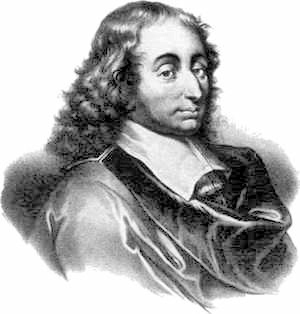
Blasé Pascal, in his Pensees, reflected on how hopeless life is without God. He believes that all men can recognize their state if they are honest with themselves, but most men try to lie to themselves and seek to escape this conclusion through distraction instead of looking for God. However, looking for God isn't enough. Pascal is keenly aware of the competing claims different faiths have about who God is and what man's end will be. However, it isn't the threat of damnation that is the convincing proof of Christianity's truth. It is the prophecies of the coming Christ that demonstrate the divine origin of the scriptures. Here's the passage:
When I see man's blindness and wretchedness, when I consider the whole silent universe and man left to himself without light, as though lost in this corner of the universe, not knowing who put him there, what he has come to do, what will become of him at death, incapable of any understanding, I become frightened, like someone brought in his sleep to a frightening desert island who wakes up with no knowledge or means of escape. And then I marvel that we do not fall into despair in so wretched a state. I see other people around me of a similar nature. I ask them whether they are better informed than I am. They tell me they are not. Then these wretched lost souls look around and see some pleasant objects to which they give themselves and become attached. As for me, I have not been able to become attached, and, considering how much more likely it is that there is something other than what I see, I have sought out whether this God has not left some sign of himself.

I see many contrary religions, and so all of them false but one. Each of them wants to be believed on its own authority and threatens un­believers. I do not therefore believe them on that account. Anyone can say this. Anyone can call himself a prophet. But I see Christianity, where I find prophecies, and this is not something anyone can do.
It has been nearly 400 years since Pascal wrote those words, yet we still see people seeking to distract themselves with "some pleasant object" (usually including a wifi connection). And still only Christ can truly answer the despair of men's souls.

References

1. Pascal, Blasé. Pensees. Edited and translated by Roger Ariew. (Indianapolis: Hackett Publishing CO., 2005) 57-58.

Friday, July 11, 2014

Horus vs Jesus in the Zeitgeist Movie (video)


The Zeitgeist movie makes the claim that the stories of Jesus are just copies of the ancient Egyptian dying and rising myth of Horus. The film lists several supposed similarities between the two stories in an attempt to prove that the Gospels were simply fabricated from pre-existing material. In this video clip below, Lenny compares the actual myth of Horus to the Gospel accounts and you can see how the claims of similarity quickly fades away.

Watch the clip below:


Thursday, July 10, 2014

Three Tips for Surviving the Job Cascade

How do you survive when you feel like you're drowning? Right now, my family as well as a family dear to us has been going through what I term "the Job Cascade." For those unfamiliar with the story, the first two chapters of the book of Job relates how righteous Job is attacked by Satan, first by an incredible series of events that target Job's livelihood, his property, and his family. However, Job proves his righteousness by pouring himself out before God, praying with the words "naked I came from my mother's womb, and naked shall I return. The Lord gave, and the Lord has taken away; blessed be the name of the Lord."


In my human mind I would think that is enough. Job did not sin, nor did he charge God with wrongdoing. But life doesn't always go the way one expects and Job gets hit a second time, this time by being afflicted with sores over his entire body. That's the Job cascade. It's when you have been drowning in one bad situation after another, and just when you think you might be able to catch a breath, another wave slams down on you.

Why would God allow so much tragedy in the life of a Christian who only seeks to rest in Him? I truly don't know. In Job's case, we get a peek behind the curtain and see two different factors happening simultaneously: God is demonstrating to Satan that holiness is not self-seeking and we learn that Job had some misunderstandings about God's nature that needed to be corrected. But, that really doesn't help you, if you are the one going through the Job Cascade, so I wanted to provide three specific tips to help you if you are in a free-fall now or when you may find yourself there in the future:

1. God Exists and Jesus Rose from the Dead

The first point may seem a bit quizzical, but it is the most important one. Many faithful Christians when facing a crisis will turn to prayer. When another crisis comes on top of the first, they pray harder. But when that next wave comes and knocks them back under water, that's when people begin to doubt. They may ask themselves "Is God real or are my prayers only reaching as high as the ceiling?" "Do I really believe that Jesus saved me just so I can go through this?"

These kinds of questions happen frequently in difficult times, but those are the exact wrong times to be asking such important questions. You never ask the most difficult questions in an emotionally charged state, because you simply cannot think as clearly as when you are calm. That's why I have held that a discipline like apologetics is so important. If you've wrestled with questions like does God exist or did Jesus really rise from the dead—taking the most strenuous objections and working through them—then you can at least clear those doubts from your mind.

I almost lost my wife when our third son was born to us, and that was my exact experience. As soon as I began doubting in my prayer time, I was able to say, "Look, I've worked through those questions strenuously, and I'm convinced that the evidence shows there is a God and Jesus did rise from the grave." That confidence enabled me to quickly vanquish my doubts and change my question to, "I don't know what you're doing Lord, but I know that my hope is in you. Can you help me get through this?"

2. Other Good Christians Have Tread Your Path

A frequent question in times of turmoil is "how can I survive any more of this?" Your particular group of circumstances may be unique, but rest assured that other Christians have gone through each of them and survived. Of course it's hard. I understand it's REALLY HARD! But know that people have come through some of the most difficult trials and they still take joy in their relationship with Christ.

Find someone who you can talk with and cry with. Find a Christian brother or sister whose walked with the Lord a long time and ask them to tell you about their heartaches and how the Lord sustained them. We can receive comfort knowing that God has worked in the past and He will continue to work.

3. No Purpose of God's Can Be Thwarted

In Job's case, it was when Job confessed his hubris in assuming to know the Lord's mind that brought an end to his trials. Job 42:2-63 records his prayer: "I know that you can do all things, and that no purpose of yours can be thwarted. 'Who is this that hides counsel without knowledge?' Therefore I have uttered what I did not understand, things too wonderful for me, which I did not know." That's an important idea for anyone hurting today as well. God's purposes cannot be thwarted, and God's purposes are clearly spelled out in the Bible. He is the unchanging Father of Lights, who give s us every good and perfect gift (James 1:17). He is the God who loves us so much that He gave His only begotten Son for our benefit (John 3:16).

The verse that I cling to most in difficult times is Romans 8:31-32, "What then shall we say to these things? If God is for us, who can be against us? He who did not spare his own Son but gave him up for us all, how will he not also with him graciously give us all things?" Meditate on that for a moment. God knows what sacrifice and pain mean. He had to give up His Son for sinners who were in rebellion against Him. If God would love you enough to sacrifice His only Son, then His purposes towards you are nothing but good. Do you hurt? Absolutely, sometimes with a pain that keeps you from breathing. But, God will ultimately bring glory to the events, either here or in heaven.

The Christian life is based on hope. It isn't the hope that comes from abolishing pain in this world, it is the hope that once we see His face in Heaven, that we would then realize our present sufferings are unworthy to be compared to the glories to be revealed there.

I know you feel like you're drowning and you may never surface. I pray deeply for you in your pain. But please hang on. There really is a God, and that means we have a hope that transcends this world. Hold on to that one thing, just that one thing, and know that all is not lost.

Wednesday, July 09, 2014

Don't Blame Christian Martyrs for Violence

There is a lot of sloppy thinking in our modern world, especially when it comes to the area of faith and beliefs. While this shows up frequently in mainstream outlets (the blog over at GetReligion has covered the myopia of the press for years), social media is one of the main enablers of quick quips that sound good but really make no sense at all. The internet meme is a prime example of this.


I've been deconstructing memes every once in a while on the blog; you can find some of my previous posts here.  Yesterday, though, I had the first opportunity to interact with the creator of one of these slick picture-slogans. Atheist Michael Sherlock claims "Christianity did not become a major religion by the quality of its truth, but by the quantity of its violence." After I had pointed out the fact that early Christianity didn't spread by doing violence, but were the victims of various martyrdoms, Sherlock sought to argue that the early church leaders would solicit Christians to become martyrs for the PR value and attract more adherents. Yesterday I showed why his claims and sources fail.

However, there's another problem with the argument. It simply isn't true that since Christians were the recipients of violent acts, it somehow justifies his meme. If one looks carefully at what Sherlock's meme states, the reasons become apparent.

Martyrdom Wasn't Attractive to Romans

First off, it would be a mistake to assume that ancient Roman culture would look upon those who are conscientiously objecting to state requirements in the same way that we may in the 21st century. One source Sherlock cites is a footnote of Anthony Briley that supposedly shows Christians are trained to be martyrs. Briley comments that "Marcus thinks of Christians as 'lined up unarmed' for death, as soldiers in battle array: but not as persons who had really made an individual reasoned choice — they were drilled, and trained to die…" I think Sherlock misunderstands this passage. Briley wasn't saying that Christian were training to die. Rather, he was using this as one of many examples of how Aurelius would see Christians in a negative light.

It strikes me this is actually evidence against Sherlock's charge. The Romans were a militaristic people and valued not dying for one's own cause, but killing on behalf of the state. Alvin J. Schmidt quotes Richard Frothingham stating "The individual was regarded as of value only if he was part of the political fabric and able to contribute to its uses, as though it were the end of his being to aggrandize the State."1. Roman virtues of frugalitas, severitas, and fidelis that Roman soldiers were expected to exhibit were considered virtuous, not the giving of oneself to death. A man who is martyred for crimes against Rome would be about as attractive to Romans as suicide bombers are to Americans today. You may get a few fringe followers, but it would in no way explain drastic growth in the same way that Christian charity and missionary efforts do.

The Problem with Blaming Christians for Being Martyrs

What Sherlock has attempted to do is to justify his meme after the fact by claiming that performing violence on Christians is the same thing as Christian violence. Note what the meme states: "Christianity did not become a major religion by the quality of its truth, but by the quantity of its violence." Anyone who reads that will understand it to say that Christianity grew to a world religion through violent conquest as its primary proselytizing method. The phrase "quantity of its violence" can be parsed clearly. Sherlock uses a possessive pronoun to state that it is Christian-generated violence that expanded the faith. Then, when called out on the mistake, he makes says the violence of martyrdom justifies his meme. He writes, "Thus, in the ante-Nicene period, prior to its transformation into a dangerous and murderous religion, Christianity was but a violent suicide cult, the aim of which was to spread by way of violent theatrics aimed at inspiring onlookers with the needless spilling of the blood of innocent fools."2

To claim that Christian martyrs died as a PR stunt is despicable . Briley, in the same footnote that's mentioned above, talks about the charges of incest and cannibalism that would also arise against Christians, false charges that Roman apologists such as Minucius Felix or Lollianus would use to stir the populous against them. 3 The fact that the Romans felt they needed to fabricate false charges puts Sherlock's claim in doubt. Historian Robert L. Wliken tells us that charges of incest and cannibalism "had become widespread" against Christians by the late second century and comments that in the Roman world "charges of immorality and licentiousness were often brought against devious individuals or groups."4 Wilken then notes how the charges became standardized, following a very specific pattern which underscores their dubious nature.5

So how does Sherlock come to the conclusion that Christian leaders would encourage "many of their followers to provoke the Roman authorities?" If so many Christians were seeking to provoke the powers that be, why would a society that values law and order need to invent anything at all? The fact is that no reputable scholar of the anti-Nicean period would ever take Sherlock's interpretation seriously. He's gasping at trying to make Christianity into something it isn't. Sherlock is using the same tact that Felix and Lollianus did, only the evidence falls against him.

The early martyrdom suffered by the saints cannot be considered Christian violence, but only violence done to Christians. Even today, Christians are the most persecuted people in the world because of their faith. Reports out of Nairobi and other nations about gunmen hunting down Christians in shopping malls are horrifying. Does Sherlock label this "Christian violence?" Does he think that the dozens who died simply because they were attending  All Saints' Church staged it for the PR value? Such claims would rightfully be considered disgusting and offensive. Just because the early martyrs preceded these by some 1700 years doesn't make Sherlock's claims any less so.

Internet memes can be very attractive if one doesn't think to carefully. It's easy to try and reduce centuries of history to a few words. But history isn't so reducible. Neither is dismissing the deaths of others because you don't like their faith.

References

1. Schmidt, Alvin J. How Christianity Changed the World. (Grand Rapids, MI: Zondervan, 2004). 48.

2. Sherlock, Michael. "Violent Christianity — Refuting the Christian Apologists at Come Reason Ministries." Web. 7-7-2014. http://michaelsherlockauthor.wordpress.com/2014/07/07/violent-christianity-refuting-the-christian-apologists-at-come-reason-org/ Accessed 7-8-2014.

3. Wilken, Robert L. The Christians as the Romans Saw Them. (New Haven: Yale University Press, 1984). 18.

4. Ibid. 17-18.

5. Ibid. 18.

Tuesday, July 08, 2014

Were Early Christians Encouraged to Become Martyrs?

A few weeks ago, I had responded to a meme (here and here) posted by atheist Michael Sherlock that claimed, "Christianity did not become a major religion by the quality of its truth, but by the quantity of its violence." Sherlock has attempted to reply to one of my arguments, but I think he falls short in numerous ways. Two primary areas where he gets both history and the argument wrong are 1) the concept that Christians somehow solicited people for martyrdom in order to attract followers and 2) the argument that since Christians were the recipients of violent acts, it somehow justifies his meme. I will deal with the first today and tackle the second tomorrow.

Sherlock makes the claim,  "We have records that testify to early Christian Church officials and fathers, encouraging many of their followers to provoke the Roman authorities and submit themselves to the violence of voluntary martyrdom, in the oft times realized hope that they might be martyred in public spectacles and thereby increase the popularity of the early Church."1That's a huge claim. Sherlock ascribes very specific and sinister motivations to the early church fathers; however he fails to produce a single document from antiquity that spells out such a plan or goal. His first stab at evidence is to quote Chapter II from The Martyrdom of Polycarp where the church fathers of Smyrna (Sherlock incorrectly attributes the passage to Polycarp himself) recount the pattern of prior martyrs for the faith and concludes:
And so like lambs, a number of the more gullible Christians of the ante-Nicene period, were sent out amongst the wolves to be slaughtered for their leader's ambitions, with the hope that the fires would be cool to them and that they, as willing martyrs for their unfounded and credulous faith, acting 'imitatio Christi,' would be afforded an opportunity to commune with Christ himself and attain a free-ticket into a non-existent heaven.2

Christians Did Not Solicit Martyrs

Sherlock's dogged misunderstanding of the text shows in many ways (you may read the passage here in context). First, this wasn't written as an appeal to action. The letter is entitled "The Martyrdom of Polycarp" and was written to explain just that. It seeks to place martyrdom in its proper Christian context and labels martyrs of that past as heroes of the faith. This is as natural as any nation reporting stories of those who laid down their lives for an ideal. But if Sherlock would have read just a bit further, he would have seen that the letter explicitly argues against promoting martyrdom for the sake of martyrdom. Just 115 words later in chapter four it recounts that a Phrygian man named Quintus who sought voluntarily martyrdom, but when he saw the fate awaiting him he apostatized instead. The letter then admonishes the Christians, "Wherefore, brethren, we do not commend those who give themselves up [to suffering], seeing the Gospel does not teach so to do."3 This statement is of course in direct contradiction to Sherlock's thesis.

Secondly, it wasn't "more gullible Christians of the ante-Nicene period, were sent out amongst the wolves to be slaughtered for their leader's ambitions." Polycarp was the one martyred! He was the leader of the church of Smyrna and therefore it would be hard pressed for his martyrdom tom result in his own ambitions somehow being met. The charge is wholly without merit and Sherlock offers not a scrap of evidence to corroborate his conjecture. It is fabricated out of whole cloth, and I do think using the epithets "gullible," "leader's ambitions," and "credulous" is simply Sherlock exercising the fallacy of poisoning the well.

Lastly, Sherlock seems to conflate his religions. Christianity in no way teaches that martyrdom provides any such favored status as a "free-ticket to a non-existent heaven." In fact, by Polycarp's own writings we see that he endorsed Paul's view of salvation as having already been received by the believer when he endorses Paul's epistle to the Philippians. In Chapter three, Paul spells out how no work of the flesh can gain one access to heaven, but only "that which comes through faith in Christ, the righteousness from God that depends on faith." Sherlock seems to think that Christian theology teaches something akin to Muslim beliefs, a position that is demonstrably false.

Sherlock's Own Sources Prove Christians Eschewed Voluntary Martyrdom

In hoping to justify his broader claim that Christians were trying to coax people to become martyrs in order to attract new followers, Sherlock quotes a few other sources, including the following passage from Henry Chadwick:
Voluntary provocative martyrs were easily engendered by promises of celestial joy. In the 190s Clement of Alexandria deeply disapproved of aggressive voluntary martyrs. Their attitude seemed to the emperor Marcus Aurelius, a Stoic defender of suicide, 'theatricality' in poor taste. Cyprian of Carthage under persecution in 250–8 also united idealized language about the martyr's crown with express disapproval of voluntary self-destruction.4
I believe that Sherlock is hoping one would read the first sentence and ignore the rest. Sherlock himself ignored the sentences just before his quote which places that paragraph in context:
Ignatius was writing in haste under difficult circumstances, and his language did not always convey precisely what he wanted to say. The language used would be surprising at any decade of the second century. The confrontation with imminent martyrdom profoundly affected him, and the impression can be given that a proper willingness to die in union with Christ has passed into a neurotic will to die.

Voluntary provocative martyrs were easily engendered by promises of celestial joy. In the 190s Clement of Alexandria deeply disapproved of aggressive voluntary martyrs. Their attitude seemed to the emperor Marcus Aurelius, a Stoic defender of suicide, 'theatricality' in poor taste. Cyprian of Carthage under persecution in 250–8 also united idealized language about the martyr's crown with express disapproval of voluntary self-destruction (emphasis added.)5
So here we have Chadwick explaining how Ignatius' letter may be misunderstood because of his duress and that he would disapprove of voluntary martyrs because other Christian leaders such as Clement of Alexandria and Cyprian of Carthage had also explicitly disapproved of such, too! Add that to the admonition in The Martyrdom of Polycarp cited above and we have a consensus in the sources that Christian teachers disdained unprovoked voluntary martyrdom. These are Sherlock's own sources, and they argue specifically against his point.

I'm certain that Christians being covered in pitch and lit on fire for to provide light to Nero's garden were not congratulating themselves. I'm certain that when Diocletian ordered the arrest and imprisonment of all bishops and priests, along with the confiscation or destruction of all church assets that these leaders did not benefit. Sherlock has taken small slivers of historical text and filled them with a 21st century new atheist viewpoint. There is real violence demonstrated in Sherlock's post; unfortunately, it is to history and to the texts themselves. Tomorrow, I will show how even if we grant Sherlock's first premise, it doesn't save his meme.

References

1. Sherlock, Michael. "Violent Christianity – Refuting the Christian Apologists at Come Reason Ministries." Web. 7-7-2014. http://michaelsherlockauthor.wordpress.com/2014/07/07/violent-christianity-refuting-the-christian-apologists-at-come-reason-org/ Accessed 7-8-2014.
2.Sherlock, Ibid.
3."The Martyrdom of Polycarp."  Translated by Alexander Roberts and James Donaldson. From Ante-Nicene Fathers, Vol. 1. Edited by Alexander Roberts, James Donaldson, and A. Cleveland Coxe. (Buffalo, NY: Christian Literature Publishing Co., 1885.) Revised and edited for New Advent by Kevin Knight. Web. http://www.newadvent.org/fathers/0102.htm. Accessed 7-8-2014.
4. Sherlock, Ibid.
5. Chadwick, Henry. The Church in Ancient Society: From Galilee to Gregory the Great. (Oxford: Oxford University Press, 2001).67.

Monday, July 07, 2014

Why is a Common Thread of Perfectionism Inherent in the LDS Community?

Note: All textual references within this article strictly correspond to the LDS standard works and LDS-authorized literature.
The Greek word for 'sin' in the New Testament means "to miss the mark"

A recent article written by Gerrit W. Gong, an elder of the First Quorum of the Seventy of the LDS church, addresses "unrealistic expectations of what perfection is." His article1 published this July, is entitled, "Becoming Perfect in Christ." My first question is why exactly this would need to be addressed at all. LDS elder Gong writes:
The word perfection, however, is sometimes misunderstood to mean never making a mistake. Perhaps you or someone you know is trying hard to be perfect in this way. Because such perfection always seems out of reach, even our best efforts can leave us anxious, discouraged, or exhausted. We unsuccessfully try to control our circumstances and the people around us. We fret over weaknesses and mistakes. In fact, the harder we try, the further we may feel from the perfection we seek.
Although I agree with his view, the notion of perfection he describes is different from the traditional LDS teachings on perfection. And as I continue to review the LDS gospel, it stuck out to me that perfection is critical because of its role in salvation. Salvation first requires perfection. This is the teaching found directly within the scriptures and from LDS leadership on the matter; it is not unrealistic, incorrect or self-imposed. It is traditionally-taught LDS doctrine. That is why perfectionism is such an inherent force within the LDS community. That being said, I feel this raises a few questions. For answers, I look to Christ's words and the words of the Apostles. To begin:

How then, is perfection a prerequisite for salvation in the LDS gospel?
This depends on what it means to be saved, so take the next natural question in line:

How am I saved?
You are saved by grace after all you can do (2 Nephi 25:23).

What do we do?
We do not sin, because if we sin, there is no grace (Moroni 10:32). We cannot be saved in our sins (Alma 11:37). God cannot allow any sin (D&C 1:31).

But, humans are imperfect. Don't we still sin in that imperfection?
God wouldn't command us if it were impossible (1 Nephi 3:7), so it must be possible to not sin. And if we have sinned, we must repent.

What does repentance do?
Repentance is not a gift since it merits something: forgiveness.2 We cannot commit the same sin again, we must forsake it (D&C 58:42-43) or it is not at all true repentance.3

But what happens if the sin is performed again? Can't we just do our best?
If sin is not forsaken, the sins will return to us again (D&C 82:7). Again, the forsaking must be permanent.4 Moreover, it is not sufficient simply that repented sins are forsaken, but the urge to sin in general must be out of our life.5 If we haven't truly repented, then the devil has power over us after death (Alma 34:35). So it specifically is in this life, not the next, that we are to prepare for God (Alma 34:32). Having a desire not to sin or sincerely trying our best is not good enough in this continual progression, either.6We must live a sinless life, absent of all ungodliness – in both action and urge – unto the rest of our lives in order for grace to save us. In essence, we must be perfect. Only then, will we be saved.7

But isn't the LDS gospel what Jesus and the apostles taught?
Paul gives a detailed explanation of this in Romans, but also makes similarly clear and decisive statements as in Galatians 2:16, "Knowing that a man is not justified by the works of the law, but by the faith of Jesus Christ, even we have believed in Jesus Christ, that we might be justified by the faith of Christ, and not by the works of the law: for by the works of the law shall no flesh be justified." The LDS gospel does not exactly give the same message that is given in the gospel of the New Testament: "One of the most fallacious doctrines originated by Satan and propounded by man is that man is saved alone by the grace of God; that belief in Jesus Christ alone is all that is needed for salvation." (Kimball, The Miracle of Forgiveness, pp. 206-207). Unfortunately, the overwhelming manuscript evidence to the contrary refutes that notion - not just in 1 gospel account or epistle, but all over the correctly translated New Testament.

What about righteous works?
"Therefore we conclude that a man is justified by faith without the deeds of the law." (Romans 3:28). That means that there is nothing a person can do, even in the Law, to be justified. It is by faith alone that people are justified. Continuing into chapter 4, Paul talks about faith (and not works) counting as righteousness: "Abraham believed God, and it was counted unto him for righteousness." This directly contrasts the verse prior, where Paul says that, "if Abraham were justified by works, he hath whereof to glory; but not before God." So although Abraham may have done righteous works, these account for naught. And this makes sense, because even in the Old Testament, Isaiah speaks for God that "all our righteousness is as filthy rags…"

Paul continues to explain what he means by a work. He says "to him that worketh is the reward not reckoned of grace, but of debt." A paycheck is not grace. A person earns a paycheck. Grace is not something that is earned, but given. Even Abraham received righteousness in his faith prior to circumcision. The covenant of circumcision came after Abraham was already justified in the righteousness of his faith. That was the blessing of promise God gave Abraham in Genesis 12:2: that righteousness comes by faith (Romans 4:13). If those are heirs of the world because of the law, then "faith is made void," and the promise is made of "none effect," that is, the promise is nullified. Even further, Paul repeats the distinction of grace and works in chapter 11:6 "And if by grace, then is it no more of works: otherwise grace is no more grace. But if it be of works, then is it no more grace: otherwise work is no more work." So salvation cannot by both grace and works – Paul explains that they are mutually exclusive. That is, they cannot be mixed. Salvation is either by works or by grace, but not a combination of both. To be "saved by grace after all we can do" is in direct conflict with the gospel message Paul preaches us. If there were plain and precious truths that Paul left out regarding salvation, then Joseph Smith must have restored this when he restored the gospel.

What does it mean that Christ was a propitiation? (Romans 3:23-26)
"For all have sinned, and come short of the glory of God; Being justified freely by his grace through the redemption that is in Christ Jesus: Whom God hath set forth to be a propitiation through faith in his blood, to declare his righteousness for the remission of sins that are past, through the forbearance of God; To declare, I say, at this time his righteousness: that he might be just, and the justifier of him which believeth in Jesus." A propitiation is an atoning sacrifice. But Christ's sacrifice imparts righteousness to those that have faith in his atoning blood. It is not about what we can do. He did it all for us on the cross. Christ speaks his last: "When Jesus therefore had received the vinegar, he said, It is finished: and he bowed his head, and gave up the ghost." (John 19:30). "It is finished" is not a difficult translation of Greek/Aramaic phrase. It means exactly that: it is finished. There is nothing else for us to do or earn, but to accept his free gift.

What about James' talk about showing faith by his works?
Because Christ has saved us, we love to do good works not to earn any righteousness (Paul already taught us that trying to earn righteousness before God is a worthless endeavor) but to bring glory to God because we love Him. James cites the same example that Paul does of Abraham (James 2:23), that faith brings righteousness, then goes on to say that a person is justified by works and faith. So is this a contradiction? No. James is correcting a distortion of Paul's teaching. James, in his very first verse, is specifically directing his letter to the Jews, and even more specifically, the Diaspora "The 12 tribes scattered abroad…" He is commanding them to be doers of the word, not simply hearers, because "faith cometh by hearing, and hearing by the word of God." (Romans10:17). They need to do, to put their faith into action. Just as much as the love of a spouse to the other makes them want to do things for the other, so too is the faith of a person in Christ. Their love for Him cultivates a spirit of action. That is what the apostle John is talking about in the beginning of his gospel account in chapter 15; abiding in Christ to bear fruit, which brings glory to God as well as makes one a disciple. And so, James continues to correct the behavior of the recipients of his letter. He gives them examples to continue to properly live out their faith, which has already saved them, and to continue to abide in the love of Christ. This love and the commandment, given by Christ to love one another, continues in John 15.

What about "be perfect, as our father is perfect?"
The Gospel is the euangelion (literally, "good news", where we get the root for terms like evangelical). Being perfect is not exactly good news. Here, knowledge of the language of the New Testament, Koine Greek (or "Common Greek") can shed light on such a passage. Thankfully, because we have an over-abundant plethora of manuscripts for the Bible, this task is possible. Take Matthew 5:48, "Be ye therefore perfect, even as your Father which is in heaven is perfect." The word for perfect is 'telayois' (τέλειος: complete – as in being fully grown; i.e. maturity, perfect, whole). This is the same type of perfection that occurs in James 2:22, "Seest thou how faith wrought with his works, and by works was faith made perfect?" This perfection and idea of works is not talking about leading to salvation. This is talking about coming to a mature faith. And not just a maturity, but an ideal, a wholeness of faith. Again, notice what James does not say, that faith does not bring salvation. James is continuing the same idea of perfection as Matthew writes about, which is a maturity of faith that is ripened by loving works, which have themselves been borne out of saving faith in Christ.

Conclusion: Faith, Salvation, and Seeing God

Although striving to do God's will and earnestly seeking to glorify Him through good works is a worthy cause, it does nothing to change our state of salvation and where we wind up after death. Our trust in Christ accepts the gift of salvation. As Paul writes in Ephesians 2:8-10, "For by grace are ye saved through faith; and that not of yourselves: it is the gift of God: Not of works, lest any man should boast. For we are his workmanship, created in Christ Jesus unto good works, which God hath before ordained that we should walk in them." And as John writes in his gospel account aDismisst 11:40, "Jesus saith unto her, Said I not unto thee, that, if thou wouldest believe, thou shouldest see the glory of God?" Truly, this is the good news of the gospel - it's not at all about anything we can do - but that his loving atoning sacrifice completed it all for us. "Then said they unto him, What shall we do, that we might work the works of God? Jesus answered and said unto them, This is the work of God, that ye believe on him whom he hath sent."(John 6:28-29)

References

1. Gerrit W. Gong, "Becoming Perfect in Christ," Liahona, (July 2014). 14-19. Elder Gong is a member of the First Quorum of the Seventy.
2. Spencer Kimball, The Miracle of Forgiveness. Salt Lake City, UT: Bookcraft, 1969. p. 354. "…the former transgressor must have reached a 'point of no return' to sin wherein there is not merely a renunciation but also a deep abhorrence of the sin – where the sin becomes most distasteful to him and where the desire or urge to sin is cleared out of his life"
3. Ibid., p. 37.
4. Spencer Kimball, "President Kimball Speaks Out on Morality," Ensign, (November 1980). Exact page number unavailable at time of viewing; article only available as a webpage, not a re-print or PDF. Former LDS President Kimball explains that repentance "seems to fall into five steps." In step 2, "Abandonment of sin," (Italics in text) Kimball states of sin, "The discontinuance must be a permanent one. True repentance does not permit repetition. The Lord revealed this to the Prophet Joseph Smith concerning repentance: 'By this ye may know if a man repenteth of his sins—behold, he will confess them and forsake them' (D&C 58:43)." And also: "Elder Kimball warns: 'Even though forgiveness is so abundantly promised, there is no promise nor indication of forgiveness to any soul who does not totally repent. . . . We can hardly be too forceful in reminding people that they cannot sin and be forgiven and then sin again and again and expect forgiveness' (The Miracle of Forgiveness, pp. 353, 360). Those who receive forgiveness and then repeat the sin are held accountable for their former sins (see D&C 82:7; Ether 2:15)" (Gospel Principles, pp. 252- 253). Kimball held this view as an LDS elder and as LDS president.
5. Spencer Kimball, The Miracle of Forgiveness. p. 355. This reference is merely the continuation of the quote starting on page 354. 6. Ibid., p. 163, pp. 164-165. 'There is one crucial test of repentance. This is abandonment of the sin. Desire is not sufficient. In other words, it is not real repentance until one has abandoned the error of his ways and started on a new path… the saving power does not extend to him who merely wants to change his life. Trying is not sufficient, nor is repentance complete when one merely tries to abandon sin;' 'It is normal for children to try. They fall and get up numerous times before they can be certain of their footing. But adults who have gone through these learning periods must determine what they will do, then proceed to do it. To try is weak. To 'do the best I can' is not strong. We must always do better than we can'
7. Ibid., p. 163. In reality, this particular chapter is probably the most critical on the concept of simply trying one's best. It makes statement after statement affirming perfection in this life first.

Rights Don't Come From Nature

Last week I began to examine how the rights of all people, as expressed in the Declaration of Independence, must be rooted in God. I looked at the concept of rights being bestowed by governments or by the common consent of the people within a society and found both wanting. Today, I'd like to look at the possibility that rights come from our natural existence rather than a divine creator.


In such discussions, it becomes important to clarify our terms. We must understand both the concept of rights and the concept of nature to which I'm referring. For rights, I've covered that somewhat in my last post. However, to reiterate I quote from the Stanford Encyclopedia of Philosophy which has a fairly good summation on the universality of human rights:
Human rights are universal All living humans—or perhaps all living persons—have human rights. One does not have to be a particular kind of person or a member of some specific nation or religion to have human rights. Included in the idea of universality is some conception of independent existence. People have human rights independently of whether they are found in the practices, morality, or law of their country or culture. This idea of universality needs several qualifications, however. First, some rights, such as the right to vote, are held only by adult citizens or residents and apply only to voting in one's own country. Second, the human right to freedom of movement may be taken away temporarily from a person who is convicted of committing a serious crime. And third, some human rights treaties focus on the rights of vulnerable groups such as minorities, women, indigenous peoples, and children.1
When I am discussing nature as the supplier of rights, I'm pointing to the idea that the natural world is all there is; we exist only because of the physical laws of the universe and perhaps some fortuitous chemical combinations and mutations that ultimately resulted in human beings. This concept is well known as metaphysical naturalism or materialism and has many adherents within the scientific community. Those who ascribe to this worldview and still seek to maintain that human rights are real would seek to ground those rights in the natural world instead of God.

But this is where the problem lies. Nature cannot bestow rights at all. The natural world is what we observe. It has materials and laws, such as the laws of gravity or the laws of physics, which describe how certain materials interact. If one drops a cannonball off a ledge, it will fall at a certain acceleration. If one combines an acid and a base, the result will be salt and water (and possibly a big explosion!)

But laws such as these are merely descriptors. They tell what will happen if certain conditions are met. Human rights are something different. For while all living persons have rights, it is not the case that all living persons will be able to exercise those rights. People are denied their rights by dictators or repressive regimes all the time.

That means that nature only provides an "is" description of the way things are while someone being allowed to exercise his or her rights fall into an "ought" description. Rights are things based in the intrinsic value of being human. Nature doesn't care about value, it is indifferent to whether creatures live or die. Species have gone extinct since the dawn of time, even without man's help. Sickness can wipe out entire nations. That is simply how things are. This means that rights are fundamentally different from nature and the description of what is. An "ought" can only be derived from a moral law, which must come from a transcendent mind.

Scottish skeptic David Hume is famous for explaining the is-versus-ought distinction. Hume explains that simply because something is the case, it does not mean that such ought to be. In Book III, Part 1, Section 1 of A Treatise of Human Nature he expounds on this, writing that "moral good and evil belong only to the actions of the mind"2 and therefore cannot be reasonably derived from only external circumstances. He continues, "All beings in the universe, considered in themselves, appear entirely loose and independent of each other. It is only by experience we learn their influence and connection; and this influence we ought never to extend beyond experience… But to choose an instance, still more resembling; I would fain ask any one, why incest in the human species is criminal, and why the very same action, and the same relations in animals have not the smallest moral turpitude and deformity?"3

As Hume has shown, there is no way to connect the "is" of the natural world to the "ought" of human rights. Even if you argue that such rights help human beings survive, who is to say that humans shouldn't go extinct? Nature doesn't care. Therefore, as rights are part of those "actions of the mind" it requires a mind to ground them, and since human rights are universal, that mind must not only transcend all of humanity, but be able to establish value for all of humanity. The Creator of humanity would fill both necessary conditions for universal human rights to exist. Therefore, the Founding Fathers had it right: it is only in our Creator that we are endowed with certain unalienable rights.  No other explanation makes sense.

References

1. Nickel, James. "Human Rights." Stanford Encyclopedia of Philosophy. ©2014 The Metaphysics Research Lab. Web. http://plato.stanford.edu/entries/rights-human/ 13-12-2013. Accessed 7-7-2014.

2. Hume, David. "Moral Distinctions Not Derived From Reason." A Treatise of Human Nature, Book II, Part 1,Sect. 1. Project Gutenberg. Web. 10-11-2012. http://www.gutenberg.org/files/4705/4705-h/4705-h.htm#link2H_4_0085 Accessed 7-7-2014.

3. Ibid.

Friday, July 04, 2014

Rights and Their Freedoms Come from God Alone

Today, millions of Americans will celebrate the 4th of July, marking the founding of our nation. Many others across the world will also take note of the day because of the uniqueness of the founding of this country. This is the first and only nation in the history of mankind not to come about because its citizens share a certain family or ethnic heritage. It didn't form because of geographic boundaries or as a group of people coalesced from war. The United States of America is the only country on earth that was founded expressly on certain ideals.


Today, Americans celebrate not simply the birth of our nation, but also the freedoms this nation offers. It is the freedoms that we cherish that make a difference. But, where do those freedoms come from? The Founders unanimously agreed that that all men "are endowed by their Creator with certain unalienable Rights, that among these are Life, Liberty and the pursuit of Happiness."1 But if God doesn't exist, would the Declaration make any sense? From where could we derive our rights if not from God alone?

In thinking about this question, it seems to me that one has only four options when arguing for the rights of persons: Our freedoms either derive from the inalienable rights granted to us by the government, the common consent of the governed, by nature, or by God alone. In the next couple of posts I intend to argue that none of the first three options make any sense. Only God can grant inalienable rights and thus it is only through God that we have any right to the freedoms we enjoy. Then, I'd like to look at a couple of those rights specifically in light of the liberal backlash against the recent Hobby Lobby court decision.

Rights don't come from governments

The first option one has in establishing our rights is the claim that they are bestowed upon us by the government. This seems problematic on its face, though, for if a government can bestow rights on an individual, then that same government can take them away. Such actions are no longer rights, but should be considered privileges that the government allows the governed. I had heard this often in high school when I was taking drivers education classes. "A driver's license is a privilege, not a right."2 The state may revoke the license if it deems you unfit to drive or if you are uncooperative by not submitting to an alcohol test, for example.

Rights are different than privileges. They are things that cannot be removed by fiat. While a government may trample on one's rights or ignore one's rights, the right itself remains. For those individuals, such as criminals who are incarcerated, they may have their rights curtailed, but that is only after a trial that shows others' rights were being infringed upon by their actions. However, no one is divorced from his or her rights.

This is what Jefferson meant when he invented the word "unalienable," it is impossible to erase rights or transfer them to another. All people have them, and that was precisely the argument the Founding Fathers were making. They were separating themselves from the government because their rights were being abused and their freedoms were being trampled. They felt it was necessary to dissolve the bonds with the government of England, so that their rights would be exercised freely. Therefore, rights cannot come from the government. Rights exist prior to governments.

Rights don't come from the governed

Because we understand that rights precede governments and that they must be unalienable, option two becomes fairly easy to dismiss. Rights cannot come from the common consent of the governed because if our rights are given by common consent, then they may be removed by common consent. The United States is a government as Lincoln put it "of the people, by the people and for the people," formed "by Authority of the good People of these Colonies" as the Declaration says. But it is not simply the agreement of the citizens of a country that bestows rights upon themselves. Such rights are again not unalienable. If they can be agreed upon my mutual consent, then they can be removed by mutual consent. Therefore, rights given by common consent are not inalienable. They are again not rights but simply agreed upon privileges.

Rights such as life, liberty, and the pursuit of happiness (not the happiness one feels when receiving a birthday gift, but the more sublime pursuit of contentment in life) must be unalienable if they are to be rights at all. That means they must transcend any human authority, for human authorities can never bestow anything unalienable. It is God alone who can do so. The Framers knew this and they appealed to God repeatedly in the Declaration. They declared that it was necessary for them to assume "the separate and equal station to which the Laws of Nature and of Nature's God entitle them." They said that "all men are created equal, that they are endowed by their Creator with certain unalienable Rights." They even finished the Declaration with an appeal to God and His authority: "We, therefore, the Representatives of the united States of America, in General Congress, Assembled, appealing to the Supreme Judge of the world for the rectitude of our intentions, do, in the Name, and by Authority of the good People of these Colonies, solemnly publish and declare, That these United Colonies are, and of Right ought to be Free and Independent States."

In my next post, I will look at the idea that rights are not derived from nature, but for now we should remember that to celebrate the freedoms that we cherish as Americans means to celebrate the rights we recognize as the basis for those freedoms. But for rights to be real, they must be grounded in Almighty God. So, say a prayer during your holiday celebrations, and thank your Creator for giving brave men the wisdom to recognize where your rights come from. Without God, there can be no freedom.

References

1 The Declaration of Independence (transcript). The National Archives. Web. 4 July 1776. http://www.archives.gov/exhibits/charters/declaration_transcript.html Accessed 4 July 2014.

2 In the article "Law Talk: Who says driving is a privilege and not a right?" Barton Dieters cites the 9th Circuit of the U.S. Court of Appeals decision in the case of Donald S. Miller v. the California Department of Motor Vehicles, where the court ruled that there simply is no "fundamental right to drive. See . http://www.mlive.com/news/grand-rapids/index.ssf/2011/11/law_talk_who_says_driving_is_a.html for more.

Thursday, July 03, 2014

Are Mormons Christians, too?

Last week, I had the opportunity to speak with a lot of Mormons during my trip to Utah. When we visited Temple Square, I spoke with a couple of Sister Missionaries who were giving us a tour of the facilities. Both sisters echoed the official Latter-day Saints claim that they were Christians even as I am. One said, "Of course we're Christians. We worship Jesus Christ just as you do. Even the name of the church is The Church of Jesus Christ of Latter-day Saints. So, we are definitely Christians."

This stance of the Mormon Church has always bothered me. In The Pearl of Great Price, considered to be sacred scripture by the LDS church, Joseph Smith canonized his account of the "first vision" of two personages (identified as God the Father and Jesus Christ) that supposedly gave birth to the church.1 Smith explains:
My object in going to inquire of the Lord was to know which of all the sects was right, that I might know which to join. No sooner, therefore, did I get possession of myself, so as to be able to speak, than I asked the Personages who stood above me in the light, which of all the sects was right (for at this time it had never entered into my heart that all were wrong)—and which I should join.

I was answered that I must join none of them, for they were all wrong; and the Personage who addressed me said that all their creeds were an abomination in his sight; that those professors were all corrupt; that: "they draw near to me with their lips, but their hearts are far from me, they teach for doctrines the commandments of men, having a form of godliness, but they deny the power thereof."2
Smith here clearly states that all the Christian denominations are "all wrong," "their creeds are an abomination," those that profess Christianity "were all corrupt," and they are denying the power of godliness. These are basically the harshest condemnations one could receive from God, and yet Mormons are steadfastly claiming "I'm a Christian, too!" If Mormons and the LDS church believe this vision is true and God really did day these things, then why on earth would they want their name associated with an apostate group whose beliefs are an abomination before the Lord?

To look at it another way, imagine that I was discussing my beliefs with a group of Wiccans. Further, imagine me stating, "I know that we disagree on the nature and character of God, but because I believe that God is responsible for creation and you do too, that makes me as pagan as you. I'm a pagan Christian!" The claim is not only nonsense, it would offensive to both the Wiccans and it would be offensive to Christianity. Paganism is the opposite of what Christianity teaches, just as the Mormon view that man may become God is the opposite of Christianity's transcendent Creator.

Christianity throughout its history has faced heresy and apostasy. Jesus warned his followers to ""Beware of false prophets, who come to you in sheep's clothing but inwardly are ravenous wolves" (Matt 7:15) and Paul cautions the church in Galatia that "even if we or an angel from heaven should preach to you a gospel contrary to the one we preached to you, let him be accursed" (Gal 1:8). Jesus and Paul were exclusivists; they held — and the early church codified — there are certain beliefs that identified someone as a Christian. If one rejects any of those essential beliefs, they must be excluded and considered not a Christian.

While the LDS church likes to use the line "we're Christians, too," it doesn't mean it's true. Perhaps they can gain some PR or a sympathetic listen from a potential convert, but Mormonism is as far from Christianity as I am from becoming a God myself. Why they would claim such is disingenuous and insulting to both their beliefs and to mine.

References

1. There exist a lot of conflicting accounts about this first vision in documents written both before and after the one included in The Pearl of Great Price. This has caused many scholars to doubt that Joseph Smith repeated the story consistently. For a few of these, see Tanner, Sandra. "Evolution of the First Vision and Teaching on God in Early Mormonism" Utah Lighthouse Ministries. Web. 8 Nov 1998.http://utlm.org/onlineresources/firstvision.htm Accessed 3 July 2014.

2. Smith Jun., Joseph. "Joseph Smith—History." The Pearl of Great Price. The Church of Jesus Christ of Latter-day Saints. Web. https://www.lds.org/scriptures/pgp/js-h/1?lang=eng Accessed 3 July 2014.

Wednesday, July 02, 2014

The insanity of denying differences between the sexes

I enjoy parody as much as the next guy. Articles like those from The Onion are funny because they take a position and ridicule it through exaggeration. That's why I was completely surprised when I saw an article by Christin Scarlett Milloy entitled "Don't Let the Doctor Do This to Your Newborn" on Slate's web site and not the Onion.


In the article, Milloy paints a picture of a woman who has just given birth holding her infant when the doctor walks in and ominously announces that the newborn is due for its "treatment" which will give the child some social advantages, but also runs a risk of dangerous side effects. Milloy puts these in the mouth of the doctor:
"Oh, in 1 or 2 percent of cases, we see long-term negative reactions to this," he says with a hint of distaste. "It leads to depression, social ostracism, difficulty finding or keeping a job. Those with negative reactions often become subject to intense discrimination in society. Suicide is not uncommon."1
Then, with a theatrical flourish, Milloy supposedly drops the bomb:
It seems unlikely that doctors, hospitals, parents, or society in general would tolerate a standard practice like this.

Except they already do. The imaginary treatment I described above is real. Obstetricians, doctors, and midwives commit this procedure on infants every single day, in every single country. In reality, this treatment is performed almost universally without even asking for the parents' consent, making this practice all the more insidious. It's called infant gender assignment: When the doctor holds your child up to the harsh light of the delivery room, looks between its legs, and declares his opinion: It's a boy or a girl, based on nothing more than a cursory assessment of your offspring's genitals.2
Oh, please. You note the quick dismissal of sex as "nothing more than a cursory assessment of your offspring's genitals." That's what those who promote sexual fluidity would have us believe. The reality is that every cell of one's body defines one's sex. Even high school biology students know this; human beings have 23 pairs of genes and the last set is either XX or XY, which determines one's sex. Those chromosomes begin a process that change hormone development, brain development, muscle mass, and bone physiology. Basically, they change the entire person's anatomy.

Because a man's or woman's sex is coded into the very DNA of an individual, it's a bit more than disingenuous to claim that we don't have to identify a child's sex at birth. Even those who claim to be transsexuals cannot have any kind of surgery to remove the offending chromosome from their system. They simply wish to pretend it doesn't exist. However, as I've written before, surgery to make one appear physically as the other sex isn't the answer. Walt Heyer, a former transsexual himself, reports that Transgender suicide death rate is at 30% regardless of whether one has had transformative surgery or not:

One out of every 3 transgenders, even after undergoing a surgical gender change, will die from suicide. Gender surgery is no help in preventing or reducing transgender suicide deaths. More than 40% of transgenders will attempt suicide and 30% will not survive the attempts and die.3

This argues that the condition of not identifying with one's sex is a mental illness which can never be treated with a plastic surgeon's scalpel.

 Milloy, if you hadn't guessed already, identifies as a transsexual and is an activist for transsexual issues, and the bias is evident in every paragraph of the article, except one. In his opening sentence he writes, "Imagine you are in recovery from labor, lying in bed, holding your infant. In your arms you cradle a stunningly beautiful, perfect little being." There is simply no way a person born with an XY set of chromosomes is in view here. He is addressing a mother who has just given birth, and no amount of fear-mongering can spin that role to something else. He later writes:
We tell our children, "You can be anything you want to be." We say, "A girl can be a doctor, a boy can be a nurse," but why in the first place must this person be a boy and that person be a girl? Your infant is an infant... The world is full of possibilities that every person deserves to be able to explore freely, receiving equal respect and human dignity while maximizing happiness through individual expression.
The problem is that a boy cannot be a mother and a girl cannot be a father, no matter how much they want to be. Such roles are not up for grabs. They are too important. The survival of the human race relies on infants having XX or XY chromosomes. Without both, we can never produce another generation. To flippantly dismiss those very real differences as meaningless shows that Milloy would damn the necessary in order to maximize his own happiness. Now that I think about it, it doesn't strike me as funny.

References

1. Milloy, Christin Scarlett. "Don't Let the Doctor Do This to Your Newborn." Slate Magzine. The Slate Group, LLC. Web. 26 June 2014. http://www.slate.com/blogs/outward/2014/06/26/infant_gender_assignment_unnecessary_and_potentially_harmful.html Accessed 2 July 2014.
2. Milloy. Ibid.
3. Heyer, Walt. "Transgenders suicide death rate at 30%." Sex Change Info. Web. 29 Dec 2012. http://waltheyer.typepad.com/blog/2012/12/transgenders-suicide-death-rate-at-30.html Accessed 2 July 2014.

Come Reason brandmark Convincing Christianity
An invaluable addition to the realm of Christian apologetics

Mary Jo Sharp:

"Lenny Esposito's work at Come Reason Ministries is an invaluable addition to the realm of Christian apologetics. He is as knowledgeable as he is gracious. I highly recommend booking Lenny as a speaker for your next conference or workshop!"
Check out more X