Blog Archive

Followers

Come Reason's Apologetics Notes blog will highlight various news stories or current events and seek to explore them from a thoughtful Christian perspective. Less formal and shorter than the www.comereason.org Web site articles, we hope to give readers points to reflect on concerning topics of the day.

Powered by Blogger.

Tuesday, February 09, 2016

History is a Problem for Those Who Doubt Jesus Was Real


There are plenty of people who deny the existence of God or the resurrection of Jesus. They may hold that there was a sage teacher of morality named Jesus who lived in the first century who was eventually executed by the Romans. Usually, the story goes that his followers taught others about his exploits, embellishing them with legendary acts and miraculous flourishes until we have the accounts of his life we read in the Bible today. These claims have been with us for centuries.

However, today there seems to be a growing subset of people who hold that not only did Jesus of Nazareth not do the miraculous deeds recorded in the Gospel accounts, but he never existed at all. The entire account of Jesus of Nazareth is mythical; it's an invention of people looking for a messiah-figure. These "Jesus-Mythicists" have gained traction primarily because of their presence on Internet. Even hyper-skeptic Bart Ehrman has noted that no New Testament scholar or historian, including the most skeptical, would hold such a view.1

The Problem of Association

One big reason the Jesus-myth scenario is rejected by scholars is the incredible hole it creates in explaining history. How could the story of Jesus gain traction so quickly if he didn't exist? Thomas Cooper, in his book The Bridge of History over the Gulf of Time, explains the problem well:
Who can ponder on Paul's history without feeling that it must be regarded as part of the evidence for the truth of Christianity? Paul's existence and course of life, and the writing of his letters to the Christian Churches are held to be facts by all the German and French schools of skepticism; and that "Reverend" Robert Taylor that I mentioned to you who some fifty years ago was a favourite of the London freethinkers holds by the same facts But what a puzzling contradiction it seems for men to acknowledge the reality of the life and recorded acts of Paul as facts and yet to deny the truth of Christianity.

What! Paul a real man and Christ a myth? Paul a real existence; Paul, who wrote so much about Christ so soon after his death and resurrection; Paul a real existing man, and Christ's existence a fable? Paul, who held the clothes of Stephen, the first Christian martyr, while they stoned him to death? Then Stephen was also a real existing man, who died praying "Lord Jesus! receive my spirit!" Paul, the glorious half-missionary, half-mechanic, who crossed the Mediterranean and the Adriatic, and visited so many shores preaching Christ, and yet there never was any Christ to preach? Paul, a real living man, who had seen and conversed with Peter, and James, and John? Then they were all real living men. How came they to say what they did about Christ if He never existed? How came they to speak of His miracles to the people who must have seen Christ's wondrous acts, if ever He performed them? Must they not have expected the people to say, "You are impostors! no such miracles were ever performed!" Yet no one said this. Even the worst enemies of Christ did not deny His miracles, though they attributed them to Satanic agency.2
This problem of explaining events such as the conversion of Paul and his self-identification as one who martyred Christians immediately after the crucifixion of Jesus, the quick dissemination of Christianity by Jesus's original followers throughout the Roman Empire, along with the appeal over and over again to eyewitnesses becomes hopelessly strained and convoluted if Jesus wasn't a real, living person. All attempts to reconcile a real Paul with a mythical Jesus hold less explanatory scope, less explanatory power, and rely on ad-hoc assumptions when attempting to make any sense at all. Cooper saw this when writing in 1871!

If Paul was real, then his life and his conversion need to be explained. The most cogent way to do that is by believing what he himself testified: he had seen the Risen Christ (1 Cor. 15:8).

I want to offer a special thanks to Dr. Timothy McGrew for collecting Thomas Cooper's book and others at his site HistoricalApologetics.org. All the titles are in the public domain and free to everyone.

References

1. Ehrman, Bart D. "Did Jesus Exist?" The Huffington Post. TheHuffingtonPost.com, 20 Mar. 2012. Web. 29 July 2015. http://www.huffingtonpost.com/bart-d-ehrman/did-jesus-exist_b_1349544.html.
2. Cooper, Thomas. The Bridge of History over the Gulf of Time a Popular View of the Historical Evidence for the Truth of Christianity. London: Hodder and Stoughton, 1874. Print. 154-155.

Monday, February 08, 2016

Has Archaeology Proven the Gospel of John?


Charisma News published a web article last week with the bold headline "Pool Where Jesus Healed a Blind Man Discovered, Proves Gospel of John Is True." It opens with the claim "Archaeological evidence now proves the Gospel of John is true," then references both Eric Metaxas and a Los Angeles Times article that quoted Princeton New Testament scholar James H. Charlesworth. The claim is irresponsible.

Before we go too far, let me first say that the discovery of the pool of Slioam is a significant find for biblical archaeology. Discovered in 2004, it offers additional evidence that the author of John's gospel had first-hand knowledge of the city of Jerusalem, just as the discovery of the pool of Bethsaida (the setting of the healing in John 5) was found with its five porticoes, just as John described them. Since the 5th century, Christians had thought Siloam was the outlet of Hezekiah's tunnel, but this discovery shows a much larger, grander pool, according to the Biblical Archaeological Society.1 As Charlesworth stated in a Los Angeles Times interview which was cited by Charisma News, "Scholars have said that there wasn't a Pool of Siloam and that John was using a religious conceit… Now we have found the Pool of Siloam ... exactly where John said it was."2

Both Metaxas in his commentary and Charlesworth are correct to say the discovery lends credence to the level of historical reliability the Gospel of John holds. But that is a completely different claim than the one leading the Charisma News article. Both the article and the headline trumpeted "Archaeological evidence now proves the Gospel of John is true." Proves? It proves the truth of the entire Gospel? That's a troubling oversimplification that is actually dangerous to the message of the Gospel, as we can see by looking at a parallel story in the Los Angeles Times.

Are You Willing to Believe in Greek Gods?

The well-developed pantheon of gods in Greek mythology is familiar to most people. Much of that familiarity comes from the required reading of Homer's epic The Illiad. It is Homer's tale that provides the narrative of Helen of Troy ("the face that launched a thousand ships"), Achilles and his heel, the Trojan War and the accompanying Trojan horse. We read how the Greek gods work for or against the story's heroes and for or against each other.

Of course, Troy and Sparta are real places, but many scholars also held the Trojan War references in The Iliad were just as mythical as the references of the Greek gods. Troy was considered at first to be "entirely mythical."3 But in 1993, the Los Angeles Times reported "Archeologists have uncovered strong evidence that the Trojan War described by the poet Homer in 'The Iliad,' one of the first and most important books in Western literature, actually occurred."4

The article then reports the archaeological advancements at Troy:
In the 1870s, German merchant Heinrich Schliemann identified what he believed to be its site, a large mound on the Anatolian Peninsula about 15 miles from the modern city of Canakkale. The mound, about 600 feet long, 450 feet wide and more than 100 feet tall, is called Hisarlik (Place of Fortresses) and is accepted as the site of Troy…

But archeologists from Blegen's generation and later ones argued that the citadel was too small to be the Homeric Troy. "People believed there was a kernel of truth in the (Homeric) story, but the citadel was too small to be an important place," Korfmann said. 5
In the 1990s, when excavations resumed after a fifty year hiatus, archaeologist can now show the Trojan War was not merely possible, but maybe even probable.

Sauce for the Goose, Sauce for the Gander

Given this, does archaeology prove Homer's Iliad is true? Would any Christian claim such? Of course not. It shows Homer was familiar with the area of Troy. In fact, the article quotes archaeologist Korfmann postulating "Homer might have written down his story while viewing this ruins of this city. The ruins available in this landscape could have been the stage for an epic."6

Similarly, the archaeological evidence for the Siloam Pool demonstrates it is implausible to believe the Gospel of John was wholly invented in Asia well after the fall of Jerusalem by someone who has never visited the city. It adds credence to the claim that John was an eyewitness to Jesus' miracles at the Pool of Siloam or Bethsaida. But one cannot claim it proves the Gospel of John. Otherwise, a well-informed atheist can simply ask why you don't also believe in Achilles, and the Greek gods, since archaeology has proven the Iliad in exactly the same manner.

There are many things archaeology can tell us and many things archaeology cannot tell us about the Bible. But let's be careful in how much we assume.

References

1. Staff. "The Siloam Pool: Where Jesus Healed the Blind Man." Bible History Daily. Biblical Archaeological Society, 3 Dec. 2015. Web. 8 Feb. 2016. http://www.biblicalarchaeology.org/daily/biblical-sites-places/biblical-archaeology-sites/the-siloam-pool-where-jesus-healed-the-blind-man/
2. Justice, Jessilyn. "Pool Where Jesus Healed a Blind Man Discovered, Proves Gospel of John Is True." Charisma News. Charisma Media, 4 Feb. 2016. Web. 08 Feb. 2016. http://www.charismanews.com/world/54933-pool-where-jesus-healed-a-blind-man-discovered-proves-gospel-of-john-is-true
3. Maugh II, Thomas H. "Archeological Evidence of Homer's Trojan War Found : History: Researchers Show That City Was Large Enough to Withstand the Epic Battle Described in 'The Iliad.'" Los Angeles Times. Los Angeles Times, 22 Feb. 1993. Web. 06 Feb. 2016. http://articles.latimes.com/1993-02-22/news/mn-438_1_trojan-war
4. Maugh, 1993.
5. Maugh, 1993.
6. Maugh, 1993.
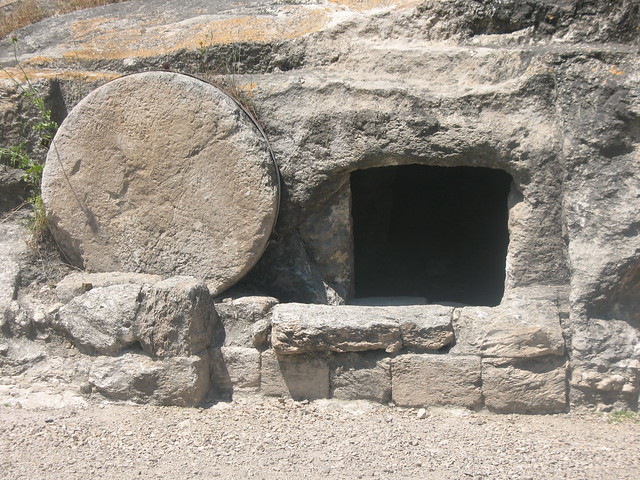
Image courtesy Ian Scott (Pool of Siloam) [CC BY-SA 2.0], via Wikimedia Commons


Saturday, February 06, 2016

Time Is No Longer the Friend of Darwinism


Today's neo-Darwinian scenarios have always relied on an abundance of time as an essential component of diversification through adaptation. We've all heard the canard where enough monkeys with enough typewriters will eventually produce a Shakespearean sonnet. Of course, it's been proven there's a big bias in even that assumption. However, now, as we learn more about the complexity and intricacy of encoded DNA instruction sets, we are finding out that time is not the friend of evolution.

In a paper published last year in the Journal Theoretical Biology and Medical Modelling, John Sanford, Wesley Brewer, Franzine Smith and John Baumgardner look at the nut and bolts of DNA mutation and calculate just how long it would take to get new, biologically meaningful nucleotides. In other words, we don't simply need genetic mutations. We need mutations that will be of some benefit to the organism, will be significant enough to be "set" in the population, and will be able to do so within a population and generational set projected for the species. Let's look at each of these requirements in more detail.

1. Mutations Must Add to the Fitness of the Organism

In their paper, Sanford et. al. looked at strings of code within the DNA commonly referenced as genes. These strings of code are the instruction set for building all the biological systems that make up you and me. Just as a book is composed sentence by sentence, the sentences are built word by word, and the words are built by strings of letter, so DNA nucleotide strings are the source of the proteins or RNA machines that build more complex biological functions. These are the foundation of biology and it is at this level where any meaningful change must happen for evolution to work.

Further, not just any mutation counts. Just as any recombination or addition of letters doesn't lead to new sentences, the mutations must be to the degree that it provides "stronger fitness benefits" to the organism according to natural selection.1 This isn't controversial in and of itself; common descent argues this way. But needing specific mutations raises the odds and requires more time than just any mutation.

2. Mutations Must be Set Within the Organism

Advantageous mutations are not good enough, though. The mutations must be of a kind to be hereditary. They have to be able to be passed from parent to offspring, otherwise they die with the carrier. Not only do they need to be hereditary but they need to be dominant enough within the population to permeate the species.

Imagine you have an isolated village of blond-haired people. One dark-haired traveler stumbles onto the village and decides to settle there. He marries and has children, some of whom are dark-haired. While dark hair is a dominant trait, not all the dark-haired man's children will necessarily carry his dark hair gene. Dark hair could still be lost within a few generations.

The model used by Sanford et. al. takes this factor into account. It also raises the complexity of the mutation, sometimes requiring the same mutation more than once in a population in order for the gene to be "set."

3. The Size and Reproductive Rate of the Population Matters

Lastly, these kinds of mutations happen at different speeds for different types of organisms, as Michael Behe deftly explained in The Edge of Evolution. For example, the E. Coli bacteria can have a population pool in the millions within a community. It divides every thirty seconds, allowing less than 20 years for researcher Richard Lenski to reach 50,000 generations.2 However, for higher primates, the population size is much smaller and they reproduce at a much slower pace. Human beings must achieve puberty before they can start having babies. This means that mutations are passed much more slowly.

So what happens when you take these various factors and put them all together into a computer model? Just how long is enough time to get a biologically advantageous mutation within a hominid population, that is an animal type that would eventually produce homo sapiens?

Sanford's model shows there simply isn't enough time for enough significant mutations to move from more primitive hominids to human beings. The paper's conclusion states:
Biologically realistic numerical simulations revealed that a population of this type required inordinately long waiting times to establish even the shortest nucleotide strings. To establish a string of two nucleotides required on average 84 million years. To establish a string of five nucleotides required on average 2 billion years. We found that waiting times were reduced by higher mutation rates, stronger fitness benefits, and larger population sizes. However, even using the most generous feasible parameters settings, the waiting time required to establish any specific nucleotide string within this type of population was consistently prohibitive.3 (emphasis added.)
Interestingly, one point noted in the paper was that increasing population sizes to help point number three actually work against point number two by making the new genetic function more diluted within the population group and therefore less likely to become "set."

Overall, the paper is interesting and offers independent verification to the time problem Behe argued in The Edge of Evolution while using a completely different methodology. Make sure you take the time to read it.

References

1. Sanford, John, Wesley Brewer, Franzine Smith, and John Baumgardner. "The Waiting Time Problem in a Model Hominin Population." Theor Biol Med Model Theoretical Biology and Medical Modelling 12.1 (2015): n. pag. Web. 6 Feb. 2016.
2. Gallup, Dave. "E. Coli: A "Model Organism" From Theodor Escherich's Legacy." The Environmental Reporter. EMLab P&K, 13 May 2010. Web. 6 Feb. 2016.
3. Sanford, 2015.

Friday, February 05, 2016

Making Good Arguments for the Faith (podcast)


Christianity is a faith that is as logical as it is life-transforming. But how do we demonstrate that to a secular world? Christians must learn how to argue better. In this recent podcast series, Lenny explains  how to share your faith using persuasive, rational arguments that powerfully defend the Christian worldview.

Wednesday, February 03, 2016

Trying to Become More Relevant Makes Liberal Churches Less Relevant


There has been a lot of noise about the rise of the Nones in the U.S. As the 2014 Religious Landscape Study reported, more people are not identifying with any organized religious. That doesn't mean they are all atheists, though. According to the Pew organization that published the study, "the majority of Americans without a religious affiliation say they believe in God. As a group, however, the 'nones' are far less religiously observant than Americans who identify with a specific faith."1 The rise of the Nones mirror the decline in mainline Protestant denominations, while religious groups such as Evangelicals are holding steady or even growing slightly. Millennials are increasingly identifying as Nones.

None of this is surprising. Millennials take an increasingly subjective view of faith claims, just as the more mainline denominations had held and taught. I believe the problem stems from the shift that occurred in the theology of mainline seminaries and churches. In the late 19th and early 20th centuries, mainline denominations became increasingly more theologically liberal, spiritualizing what had previously been understood as objective morality and a record of historic events. This was their fatal move, as Francis Schaeffer pointed out in How Should We Then Live:
The new liberal theology, because it says that the Bible does not touch the cosmos or history, has no real basis for applying the Bible's values in a historic situation, in either morals or law. Everything religious is in the area of non-reason, and since reason has no place there, there is no room for discussion; there are only arbitrary pronouncements. Immanuel Kant could not bring together the noumenal and the phenomenal worlds, and the new theologian has no way logically to bring his personal arbitrary values into a historic situation. Or to say it another way: Sartre said that in an absurd world we can authenticate ourselves by an act of the will; but, as we saw, because reason has no place in this we can help people or hurt them. Similarly, because the pronouncements of these theologians about morals or law are arbitrary, in a different mood they, too, can be totally reversed.

The new theologians also have no way to explain why evil exists, and thus they are left with the same problem the Hindu philosophers have; that is, they must say that finally everything that is is equally in God. In Hindu thought one of the manifestations of God is Kali, a feminine representation of God with fangs and skulls hanging about her neck. Why do Hindus picture God this way? Because to them everything that exists now is a part of what has always been, a part of that which the Hindus would call "God"—and therefore cruelty is equal to non-cruelty. Modern humanistic man in both his secular and his religious forms has come to the same awful place. Both have no final way to say what is right and what is wrong, and no final way to say why one should choose non-cruelty instead of cruelty.2
Because mainline denominations abdicated an objective standard of scripture for subjective one, they lost their claim to any real knowledge about the world. The Millennials have recognized this. If there is nothing liberal theology can provide and concrete and objective, then why bother with it at all? If one teaches an olly-olly-oxen-free approach to faith, then why would anyone need to bother with the inconvenience of waling up early to drive to some church building and sit in a pew so someone else can tell them what their understanding of spirituality is? The congregant has his or her own view, which is equally true, so why not skip the whole enterprise? And that's what they've been doing.

Ironically, many mainline churches have tried to recapture the interest of the Millennial generation by showing just how progressive and accepting of all viewpoints they rare. I see banners all the time hanging from Methodist or ELCA churches proclaiming their diversity and acceptance of views that have historically been anathema in Christianity. They don't seem to realize their stance makes their church less relevant in the mind of Millennials, not more so.

References

1. "U.S. Public Becoming Less Religious." Pew Research Centers Religion Public Life Project RSS. Pew Research Center, 02 Nov. 2015. Web. 03 Feb. 2016. http://www.pewforum.org/2015/11/03/u-s-public-becoming-less-religious/
2 Schaeffer, Francis A. How Should We Then Live?: The Rise and Decline of Western Thought and Culture. Wheaton, Ill: Crossway, 2005. Print.177-178.
Image by Colin Babb and licensed for reuse under this Creative Commons Licence.

Tuesday, February 02, 2016

Making the Most of your Daily Devotions (Free Bible Download)


I am in the book of Revelation in my devotions this morning, reading the message of Jesus to the church in Ephesus. Jesus praises the Ephesians for their passionate and diligent pursuit of truth. However, he also warns them they were in danger of losing their place because "You have forsaken the love you had at first." (Rev. 2:4, ESV). This first love seems to be tied to the good deeds they did at the beginning of the church's ministry. Because of this, commentators see the first love to refer both to the love of Jesus and their love for one another.[1]

All Christians need to cultivate and nurture their love of Christ and for others. The first and best discipline to do this is during your daily devotions. As an apologist, my devotion time is critical, as it would be easy to slip into a habit of faith-defending without love. However, a few years ago, I noticed that even my devotions started to become a rote exercise. My prayer time would be dominated by my requests and my reading was all about quickly finishing the chapter so I could move onto something else.

In order to break out of this habit, I decided to be more deliberate in approaching my prayer time. I liked the ACTS outline of prayer (Adoration, Confession, Thanksgiving, and Supplication) but needed a grid in which to place it. So, I came up with the following outline that I keep in my Bible and update monthly. I've created a downloadable template for you to save and use for your own devotion times. You can grab either the PDF or the editable Word version. Fill it in, print it out and keep a folded paper copy in your Bible to use each morning. Then, update it each month.

Here's my approach:

1. Contemplating the Nature of God through the Names of God

In God's word, God reveals different aspects of who he is through the various names he uses for himself. So I took eleven different names of God and laid them out in a two-week grid — one for each weekday and a dual-meaning name for Saturday and Sunday. I then contemplate in my prayers the different ways God fulfills the attributes of the "name of the day."

For example, if I am thinking about "Jehovah Sabbaoth - The Lord of Hosts," I contemplate how my holy God s the God over the armies. He can command legions of angels. He is the one who nothing or no one can overwhelm. I let me mind work on that aspect o God's character and I see if I can find new ways of understanding God as the Lord of hosts. Because this is a two-week cycle, it keeps my thoughts about God fresh and my desire to more keenly understand him.

2. Contemplate the Cross and the Sacrifice of Salvation

Coming to the Cross is hugely important. I think about Jesus and what it meant for him to give his back to the torturers. I think about his taking my sin upon himself. I think as a father with children about the sacrifice the Father made as he gave his beloved son to die so that I may live.

3. Ask for forgiveness of sins.

This is the place where I review and confesses my sins. It may be something big or small, but even a sin of hubris or not trusting should be honestly offered here. Make sure you use the Christian's bar of soap (1 John 1:9)!

4. Give thanks for blessings.

We all have more to be thankful for than what we can imagine. I normally open my eyes during this part of my devotional time, so I can be reminded of the many blessings I do have. When I do devotions outside, this drives me to be thankful for God's creation and the oxygen in my lungs.

5. Pray for self.

Here's where I begin the Supplication area. First, I pray I would reflect Jesus in what I say and what I do and what I think. I want to see others the way Jesus would see them. I then pray of my responsibility as a father, as a Christian witness, and any immediate needs I have.

6. Pray for family members

Next, I list out each immediate family member and pray for then. Usually, I pick four or five areas that I pray for. I always try to make sure I think about how can God change/use myself to be more effective in helping them as opposed to "change this thing I don't like" kinds of prayers. Also, because I update this list monthly, it is god practice to come up to your spouse and your children and ask them "What can pray for for you this month?" This ai a great way to stay in touch with your kids and hear what's critical in their, lives.

7. Pray for ministry/job/household finances, etc.

After I've prayed for people, I thin pray for my job or ministry, any financial issues, any difficulties our family may be facing, and other issues affecting us.

8. Weekly rotating prayer for community

Lastly, I use a one week rotation of specific, focused prayer for the larger community. The breakdown is below and also on the template:
  • Mon - Church
  • Tues - Martyrs & those suffering
  • Wed - Government and elected officials
  • Thurs - Apologetics ministries
  • Fri - Educational institutions
  • Sat/Sun — special requests
This list has helped me in my daily devotional time to really pray better, to draw closer to God and to focus my prayers more specifically. I hope it helps you in your devotional time as well. Let me know of any additions or suggestions you have. I can always learn more.

References

1. See note for Revelation 2:5 in The ESV Study Bible. Wheaton, IL: Crossway Bibles, 2008. Print. 2465.


Monday, February 01, 2016

Book Review: The Fate of the Apostles by Sean McDowell


Since Christianity's inception, it has been common for Christian faith-defenders to offer evidence supporting their belief in the risen Jesus. From Paul's testimony in 1 Corinthians 15, the claim of eyewitnesses to support the resurrection of Christ has been integral to Christianity. Many people point to the fact that Jesus's apostles died without ever recanting their belief in him as evidence of the truthfulness of their testimony.

But is this as strong a piece of evidence as we've been led to believe? How do we know the apostles were actually martyred, and does dying for one's faith prove anything other than loyalty to a belief system? These are the questions Dr. Sean McDowell takes up in his new book The Fate of the Apostles: Examining the Martyrdom Accounts of the Closest Followers of Jesus (Ashgate, 2015). In The Fate of the Apostles, McDowell traces the historical evidence for the deaths of each of the Twelve and offers an objective rubric for weighing the probability of their martyrdoms.

Clarifying What They Died For

Martyrdom is a heady concept. Across the theological spectrum, there are many people who give up their comfort for their beliefs. There are fewer who may subject themselves to pain or abuse because of their faith, and fewer still who die for a religious belief. But all religious traditions can probably point to someone who qualifies as a martyr for their particular faith. So, how to approach the apostles' martyrdom, if they truly were martyred, encompasses the first four chapters of the book. McDowell keenly clarifies his goal is not to show the apostles were steadfast unto death not simply in their refusal to give up Christianity, but they very specifically refused to deny seeing the risen Christ.

This is a key point and one that must be emphasized again and again to detractors who would liken the apostles' fate to suicide bombers or some other modern contrivance. There would be a difference between sincerely holding to the faith in which one was raised and groomed versus the threat of death for testifying you've seen an executed enemy of your childhood faith (and Rome) walking around. McDowell makes the point right off in his book by underscoring the distinction:
The deaths of others for their religious causes in no way undermines the evidential significance of the fate of the apostles. Second, the apostles' willingness to die for their beliefs does not demonstrate the inherent truth of the Christian message, but that the apostles really believed that Jesus had risen from the grave. The apostles could have been mistaken, but their willingness to die as martyrs establishes their unmistakable sincerity.1

Outlining the Fate of Each Apostle

In the book, McDowell spends the first four chapters outlining the nature and understanding of what martyrdom is, how it would have been understood to the first generation of Christians, and how it would fit within their newly forming belief system. He then devotes a chapter to each of the apostles, including Paul and Jesus's brother James. As would be expected, the historical evidence shrinks when lesser-known apostles such as Simon the Zealot or Matthias are considered. Still, McDowell does a great job showing that even with some apostles' fate in question, there is ample evidence of apostles who did in fact die for their testimony of the risen Jesus and there exists not a shred of evidence that any apostle recanted their belief. Given each would have been considered an eyewitness testifying on first-hand knowledge, this is impressive and does the heavy lifting in setting up the historical bedrock that the disciples did have some kind of experience that needs explaining.

Readability

While the book is written and priced for an academic audience (Amazon is offering the hardback at a pricey $118), McDowell's style is open and easily enough read to be handled by a sophisticated high school student. The footnotes throughout offer good support for his claims within the text and his openings and conclusions of each chapter gives the reader a nice, concise guide to the evidence more fully developed between them.

The Fate of the Apostles takes on a historical question that no one else to my knowledge has done in such a complete manner. McDowell has truly done us a favor in his research and publishing, investigating claims that were assumed but not demonstrated in a systematic way. We now have a go-to source that should advance the discussion for the evidence of the resurrection. For anyone interested in church history, apologetics, or the origin of Christianity, I highly recommend this book.

References

1. McDowell, Sean. The Fate of the Apostles: Examining the Martyrdom Accounts of the Closest Followers of Jesus. Burlington, VT: Ashgate, 2015. Print. 4.

Saturday, January 30, 2016

Good Arguments Aren't Enough in Defending the Faith


Facts, reason, and evidence play key roles in apologetics. Christian defenders spend many hours studying the latest arguments for or against God's existence, the resurrection, or other issues fundamental to the faith. This is good and necessary; familiarizing oneself with the latest arguments on both sides of the divide gives you a greater advantage at presenting the most persuasive case possible.

However, there is another piece that many Christians neglect which is just as crucial: how to engage in a disarming, persuasive manner. James W. Sire makes the point in his book Why Good Arguments Often Fail. He writes:
In presentations of the case for Christ, good rational arguments often do not persuade. I mean by "a good argument" one that starts from true premises and/or facts, makes no logical mistakes (fallacies), marshals a great body of evidence, answers objections, clarifies the issues and draws valid (therefore true) conclusions. 1
Sire then recounts the experience of one young Christian who recounted C.S. Lewis's moral argument to an atheist friend. It didn't stir his friend at all. Sire notes such experiences are typical. He then concludes:
When such rational arguments are made in the field of Christianity, they are often not just ignored but rejected. Why is this?

Aristotle overstated the case, but still we should heed the warning it contains:

Every failure of Truth to persuade reflects the weakness of its advocates.

This is a humbling reminder of our responsibility as Christians: we must make the best presentation of the gospel that we can make. Of course, we are limited in our ability—every one of us, the clever and the not so bright. Our Lord knows this and works around our limitations. But we are responsible to do our best.2
Studying techniques at proper approach and presentation, in other words making your arguments not simply sound but persuasive, is known as rhetoric. Rhetoric is probably a more difficult skill to learn than even understanding the arguments themselves, as there is no one pattern that fits every person or every occasion. It's as much art as science, and it requires the rhetorician to be as good a listener as he is a speaker.

This isn't to say rhetoric cannot be taught. Many techniques do exist to make your case more persuasive. Sire's book is a great place to star to learn how to be more winsome and persuasive in presenting your case for Jesus.

When Jesus sent out his disciples in Matthew 10, he told them, "Behold, I am sending you out as sheep in the midst of wolves, so be wise as serpents and innocent as doves." Learning rhetoric is obeying his command to be wise in the midst of wolves. Make sure you take some time to learn persuasiveness as well as the facts.

References

1. Sire, James W. Why Good Arguments Often Fail: Making a More Persuasive Case for Christ. Downers Grove, IL: IVP /InterVarsity, 2006. Print. 73.
2. Sire, 2006. 73-74.

Thursday, January 28, 2016

Banning God from Government isn't Neutral


At the last Republican presidential primary debate in Iowa, atheist groups plan on holding a demonstration entitled "Keep Your Theocracy Out of Our Democracy." According to a press release by the Coalition of Reason, the event is a way of "demanding a separation of religion from government" as well as "to raise the visibility of the voice of non-theistic voters and the issues that they care about."1 ;The theme of separation of church and state plays prominently in the press release and will do so at the event as well.

The theme of; Eastern Iowa COR spokesman Rocky Gissler summed up, "An elected government official takes an oath to uphold and defend the Constitution that applies to all citizens, and their 'sincerely-held beliefs' should not supersede the supreme law of this country. When religious bias is allowed to influence our laws, it can result not only in discriminatory actions toward whole groups of people, such as the LGBTQ community, but grievous harm to individuals."

The complaint that religious belief should have no influence on governmental decision-making is a recurring one among atheist groups today. That's exactly what the title of this protest communicates. I also just wrote about how atheist Justin Scott has been quizzing the various candidates on whether they plan to cater to atheist values and telling Marco Rubio "there's talks in our community about you running as Pastor-in Chief instead of Commander-in-Chief." When engaging with Mike Huckabee, Huckabee asked Scott whether he thought the public schools should be anti-religious. Scott's reply is telling. He said, "Not anti-religious. I believe there's value in teaching religion in terms of history, in terms of literature, but not in terms of 'This is truth.'"

Secularism Makes Truth-Claims about the World

What Gissler, Scott, and others like them fail to realize is the sentiment of holding religion as an untruth is not taking a neutral position. There's a big assumption that because something may be classified as secular it is unbiased, but that simply doesn't follow. For example, Gissler's statement above takes a particular moral stance on the same-sex marriage debate. He is allowing his secularism to inform him of what legislation he deems appropriate and which legislation he deems discriminatory.

When one looks at education, we can find the same trend. To teach evolution as the dominant explanation for the diversity of life on the earth is understandable in a science class. However, by labeling evolution as "secular" and any and all competition theories as "religious," an inherent bias is set up. That's problematic, because neo-Darwinism needs to be falsifiable to be a scientifically solid explanatory theory. ;But what would the parameters of what falsification look like? Instead of blind natural processes, diversity would require some kind of purposeful creator. Atheist claim this is forbidden.

The preference of atheists to assert secularism over other types of beliefs are clear. Atheists demand that none of their tax dollars goes to anything even remotely resembling faith. Nativity scenes, crosses existing on public lands, and even food pantries for the poor have all been targeted by atheist groups who hate any association of tax dollars with even the hint of a theistic belief system. But what about Christians who are supposed to support secular programs in schools to the exclusion of their beliefs? Why should only those who make the claim "God does not exist" get the free ride? That's what the protesters are really demanding; they want their beliefs to be the only ones in government. But our government is founded upon the belief that it is God who gives us certain rights . Take God away and all those rights the atheists are demanding fold like a house of cards.

Demanding Freedom or Oppression?

It's easy to try and play off secularism as a neutral position, but secularism isn't neutral. It stands opposed to most religious belief systems. If our country is truly going to be a free one, then its citizens must be able to draw upon their first freedom of the free exercise of religion. We must be able to exercise that freedom in our workplaces, in our schools, and in the voting booth. And those whom we elect should be able to exercise their beliefs and draw upon those beliefs to inform their views while in office. Anything less is demanding as oppressive a government as the one our Founders fled.

References

1. "Godless Expression of Free Speech from Atheist Voters at Final GOP Debate." Uniterdcor.org. United Coalition of Reason. 26 Jan 2016. Web. 28 Jan 2016. http://unitedcor.org/godless-expression-of-free-speech-from-atheist-voters-at-final-gop-debate/

Tuesday, January 26, 2016

Do Religious Candidates Pose a Threat for Atheist Voters?

It's an election year in the United States and presidential candidates have been stumping for votes across the country. Most have been holding various town hall meetings where they could meet with voters and answer their questions or concerns. Interestingly, one YouTube vlogger named Justin Scott has been attending some of the meetings as a representative of the atheist community. Here's how Scott approached Republican candidate Marco Rubio with his question:
I'm an atheist voter. I represent millions of atheists and non-theists around the country, one of the fastest growing voter blocs and you said earlier that you want to stand up for religious freedom and all of that. My question is for atheist voters that are looking for somebody that will uphold their rights as Americans and not pander to a certain religious group.

I just noticed your recent ad. It mentioned nothing about policy, it mentioned nothing about ideas. It simply talked about wanting us to follow faith and find God and go to heaven and things like that, which is fine for those people that align with you.

My question is how do you plan on upholding our rights and focusing on non-theists. You know, there's, there's talks in our community about you running as Pastor-in Chief instead of Commander-in-Chief, so I'm curious your thoughts.
Notice the core of Scott's question. He states atheist voters are looking for a candidate to "uphold their rights as Americans and not pander to a certain religious group." He then asks Rubio "how do you plan on upholding our rights and focusing on non-theists."

Scott's line of questioning is strange. Must the president of the United States focus on non-theists in order to uphold their rights? If that's true, then he must also focus on every group of every religious persuasion, a daunting process in a widely diverse country of 330 million people. Scott also includes a couple of ad hominems in his question, using the label "pastor-in-chief" and implying Rubio may be pandering to a certain religious group.

Notice, there are no specifics tied to his concerns. He doesn't point to any legislation Rubio sponsored that violates the First Amendment rights of non-believers. He offers no specific instances where Rubio personally showed animus towards non-believers and Rubio does a great job of answering Scott by pointing to the First Amendment. (You can watch the entire exchange here.)

Scott's similar question to Mike Huckabee offers more illumination on Scott's concern:
I'm an atheist, and I feel as if the Republican Party lately is hell-bent on tearing down separation of church and state. I want to know your thoughts on that. I also want to know why should I vote for you. Why should millions of atheists around the country support a candidate that has made comments like you've made about us?
At this point, Huckabee asks Scott "What have I made about you?" Scott again dodges any specific charges, simply offering a generalized caricature of the comments as "they haven't been pretty." Huckabee answers he would in fact uphold the First Amendment and how if guarantees Scott and any other non-believers "to be atheists as much as it guarantees me the right to be a Christian, or somebody else the right to be a Jew or Muslim or Hindu, or Buddhist." Huckabee is right here. The separation clause of the First Amendment simply says the Federal Government cannot compel any religious belief or non-belief upon its citizenry.

One point Scott seems to miss here is being a passionate believer about one's particular faith is not a disqualifier for office, even the office of president. If one holds to Christianity, that doesn't simply mean the person attends Sunday church. It means the Christian worldview will shape his or her understanding of all reality. That's protected by the very First Amendment that also protects Scott's view of reality.

Because Scott can't seem to offer specifics of where the candidates demonstrate a predilection to abridge the rights of non-believers and cannot even name exactly which rights he means, his question strikes me as pandering. He's unjustifiably biasing a candidate solely on their religious views. Thus, Scott really fails to add any substance to the discussion on the candidates and how non-believers will fare under their leadership.

Tomorrow, I will explore a bit more of Scott's comments and specifically his concern with religion in schools. But for now, the lack of detail should be more troubling for those who are cheering Scott on than for any of the candidates.

Monday, January 25, 2016

Does "We Believe as We Are Taught" Explain Christianity's Popularity?


The vast majority of people across the globe believe in some type of deity. However, much has been made of recent polls showing that in western nations such as Europe and the United States there is a growing number of people who do not believe in God. One recent article pointed to a poll of Icelanders that claimed no Icelander under the age of 25 believes God created the world. 1 Given the fact the poll was conducted by an atheist group and they also found 42% of those that same 25 and younger set identified as Christian, I would question the poll's methodology before making the grandiose claim of 0.0%.

But the desire of those like the Icelandic Ethical Humanist Association to trumpet how more and more people are disbelieving God raises another issue. What are they trying to say? How does the fact we see some growth in the number of atheists and agnostics correlate with that is true and what is not? Certainly, such an argument would be counter-intuitive for the atheist. If truth was found by percentages, then the theists' numbers provide overwhelming evidence for God's existence.

Usually, atheists don't argue that point. They take the tact that religious beliefs are held because they are taught or caught like a virus. Richard Carrier claims "The most fundamental reason for the persistence of religious belief is the very simple fact that we believe as we are taught." 2 Atheists sometimes make the related argument that goes something along the lines of, "If you were born in Afghanistan, you'd be arguing for Allah's existence right now!"

However, there are several problems with this claim. We can look at least three:

1. It Commits the Genetic Fallacy

Just because we're taught something doesn't make it wrong. We believe other things, like molecules are comprised from atoms. We hold to that belief without having to do our own experiments. Even counter-intuitive beliefs like how quantum particles behave as if they know we're going to look at them before we do in double-slit experiments. Even if my fourth grade teacher was a crook and a liar, does that mean I shouldn't believe Father Serra was responsible for building the California Missions? There are a whole host of things people believe because they are taught. One cannot dismiss the belief simply by questioning the source.

2. Christianity's History Shows the Opposite

While it's true that some people will accept their faith system without question, it doesn't mean this was the way the faith system itself grew. Islam has a history of conquest and pressing its belief system onto subjugated groups. Christianity, however, grew differently. Christians for 2000 years have been going into places where people believed something else and converting them. Although a group such as the Greeks or the Irish or the Romans held to a particular belief system, one that they were taught, they converted to Christianity freely because they were presented with the truth of the Gospel. They changed their beliefs, even though it many times meant more danger and persecution.

3. Atheists Will Abandon Their Beliefs Today

Finally, there are beliefs that are abandoned as unsupportable EVEN THOUGH we've been taught them. Most every adult I know was taught that Santa Claus existed as a child, but I know of not a single individual who has remained committed to that belief. I certainly have never heard of an individual who grew up not believing in Santa Clause but decided at 35 Santa was real!

However, I know many very reasonable people who grew up atheist but as an adult abandoned atheism for Christianity. C.S. Lewis is one example. In countries like Afghanistan today, people are converting to Christianity though they were taught Islam and the punishment of apostasy is death. Ravi Zacharias was born in India, but he isn't arguing for Hinduism.

The claim that religion succeeds because of mental laziness is itself as lazy claim. It's also one that turns on itself; I could use the same concept to argue that the increase in non-belief isn't because of thoughtful reflection, but it is simply a reaction to what atheistic teachers are telling young people in colleges. In order to determine the truth about God, we mustn't look to polls. We need to investigate the truth claims each offers.

References

1. Staff. "0.0% of Icelanders 25 Years or Younger Believe God Created the World, New Poll Reveals." Iceland Magazine. Imag Ehf., 16 Jan. 2016. Web. 25 Jan. 2016. http://icelandmag.visir.is/article/00-icelanders-25-years-or-younger-believe-god-created-world-new-poll-reveals.
2. Carrier, Richard. Sense and Goodness without God: A Defense of Metaphysical Naturalism. Bloomington, IN: Authorhouse, 2005. Print. 261.

Saturday, January 23, 2016

Abortion and the S.L.E.D. Argument


Tomorrow is Sanctity of Life Sunday and I can think of no better post for today than to quote Scott Klusendorf's S.L.E.D. argument answering those who would promote abortion. Abortion is one of the greatest evils in our day and there is no justification for it. There is no greater definition of evil than when a human being is killed simply so other will not be inconvenienced. Here's how Klusendorf lays out his argument:
Philosophically, there is no morally significant difference between the embryo you once were and the adult you are today. Differences of size, level of development, environment, and degree of dependency are not relevant in the way that abortion advocates need them to be. The simple acronym SLED can be used to illustrate these non-essential differences:

Size: True, embryos are smaller than newborns and adults, but why is that relevant? Do we really want to say that large people are more valuable than small ones? Men are generally larger than women, but that doesn’t mean they deserve more rights. Size doesn’t equal value.

Level of development: True, embryos and fetuses are less developed than you and I. But again, why is this relevant? Four year-old girls are less developed than 14 year-old ones. Should older children have more rights than their younger siblings? Some people say that the immediate capacity for self-awareness and a desire to go on living makes one valuable. But if that is true, newborns do not qualify as valuable human beings. Infants do not acquire distinct self-awareness and memory until several months after birth. (Best case scenario, infants acquire limited self-awareness three months after birth, when the synapse connections increase from 56 trillion to 1,000 trillion.) As abortion advocate and philosopher Dean Stretton writes, “Any plausible pro-choice theory will have to deny newborns a full right to life. That’s counterintuitive.”

Environment: Where you are has no bearing on who you are. Does your value change when you cross the street or roll over in bed? If not, how can a journey of eight inches down the birth-canal suddenly change the essential nature of the unborn from non-human to human? If the unborn are not already valuable human beings, merely changing their location can’t make them so.

Degree of Dependency: If viability bestows human value, then all those who depend on insulin or kidney medication are not valuable and we may kill them. Conjoined twins who share blood type and bodily systems also have no right to life.

In short, although humans differ immensely with respect to talents, accomplishments, and degrees of development, they are nonetheless equal (and valuable) because they all have the same human nature.1
1.Klusendorf, Scott. "Five Bad Ways to Argue About Abortion." Life Training Institute. Life Training Institute, n.d. Web. 23 Jan. 2016. http://prolifetraining.com/resources/five-bad-ways/
Image courtesy lunar caustic - Embryo, CC BY 2.0

Friday, January 22, 2016

You Need an End Game for the Origin of Life


Antony Flew was one of the more formidable philosophers who argued against Christian theism over the course of his career. Flew was intelligent, a powerful writer but fair in his argumentation. But he never let his ideology get in the way of his investigation. As he said, "My own commitment then as a philosopher who was also areligious unbeliever was and remains that of Plato's Socrates: 'We must follow the argument wherever it leads.'" 1

Even as an "areligious unbeliever" philosopher, Flew had become more and more bothered by certain inherent problems associated with the neo-Darwinist conception of evolution. Primarily, Flew was concerned about the origin of life, or as the question he later asks in his book, "How did life go live?" Even prior to his announcement that he was renouncing atheism and identifying as a theist, he wrote:
Probably Darwin himself believed that life was miraculously breathed into that primordial form of not always consistently reproducing life by God, though not the revealed God of then contemporary Christianity, who had predestined so many of Darwin's friends and family to an eternity of extreme torture.

But the evidential situation of natural (as opposed to revealed) theology has been transformed in the more than fifty years since Watson and Crick won the Nobel Prize for their discovery of the double helix structure of DNA. It has become inordinately difficult even to begin to think about constructing a naturalistic theory of the evolution of that first reproducing organism. 2

The End Goal of Life Must be there in the Beginning

Flew identifies three key questions about the origin of life that are philosophical in their purpose. He asks, "How can a universe of mindless matter produce beings with intrinsic ends, self-replication capabilities, and 'coded-chemistry'?"3 These are key issues in the debate over the origin of life.

The first concept, that of the goal of an organism is tied in come ways to the second concept. Living things reproduce. Without reproduction, evolution is a non-starter. When one discusses the origin of life, one of the goals of that organism's function must be to make more of itself; otherwise we only see a recurring series of dead ends. But we don't see this as a result of any other laws of nature. Just how did this function of organisms that are living and have some kind of end goal (e.g. surviving and reproducing) come about? And how did the DNA, which represents the coded chemistry, become representative of those functions?

Goals and desired ends don't come about by random acts. Neither do codes. Codes are really arbitrary. Flew points to David Berlinski's example of Morse code, noting the connection of dots and dashes to specific letters is the connection a mind makes.4 The codes are a vehicle to carry information, but they aren't the important part of the equation. The message is. Therefore, codes exist first in the minds of the code-builders who construct them for a specific purpose, to communicate messages over a certain medium.

So, the purpose or design or the end game—what is known in philosophy as teleology— of an organism is crucial to not simply sustaining life but to life's origin. From the very beginning, we see life must have the goal of survival and replication built in.  It uses coded DNA to carry out this goal; and the code itself implies a goal-oriented creation.

The very first life requires purpose and cannot be explained away as mere randomness.The question becomes, how can you get goals without a mind?

References

1. Flew, Antony. "Letter from Antony Flew on Darwinism and Theology." Philosophy Now, Issue 43. October/November 2003. Web. 22 Jan 2016. https://philosophynow.org/issues/47/Letter_from_Antony_Flew_on_Darwinism_and_Theology
2. Flew, 2003.
3. Flew, Antony, and Roy Abraham. Varghese. There Is a God: How the World's Most Notorious Atheist Changed His Mind. New York: HarperOne, 2007. Print. 124.
4. Flew, 2007. 127.

Thursday, January 21, 2016

350 Year Old Frenchman Talks About Facebook


I love history. I love to look at ancient edifices or read about past civilizations and try to really get into the minds of those who have come before us. It can seem we're so very different from the Romans or Greeks or Egyptians. We're so much smarter today, after all look at how much our advancements have given us! Such a view is really superficial. Those people were people and their motivations were by and large the same ones we have today. Certainly, they are packaged differently, but it's striking just how much humanity doesn't change from age to age.

Take the issue of self-perception. All people are worried how others perceive them and a significant number elevate the perceptions of others over everything else. Perhaps it was whispers between friends in ages past; today, it's counting comments on Facebook. The drive is the same, though. We want people to think more of us.

As a case in point, look at the writings of Blaise Pascal. His Pensées, or Reflections, was written over 350 year ago, before his death in 1662. Yet, one line neatly sums up the very modern drive of young people fishing for Instagram likes or YouTube fame. He writes, "We are so presumptuous that we would like to be known throughout the world, even by people who shall come when we are no more. And we are so vain that the esteem of five or six people close to us pleases and satisfies us." (#152)1

Pascal even expanded on this to say how much the views of others matter more to us than our own reality. Tell me if these sounds like how so many treat their social media posts today:
We are not satisfied with the life we have in ourselves and in our own being; we want to live an imaginary life in the mind of others, and for this purpose we endeavor to make an impression. We labor constantly to embellish and preserve this imaginary being, and neglect the real one. And if we are calm, or generous, or faithful, we are eager to make it known, so as to attach these virtues to our other being. (#653)
Of course, cultivating the imaginary being online means being something other than honest; making the division more pronounced:
We would rather separate them from ourselves to unite them to the other. We would willingly be cowards to acquire the reputation for being brave. This is a great sign of our own being's nothingness, of not being satisfied with the one without the other, and of renouncing the one for the other! For whoever would not die to save his honor would be infamous. (#653)2
That sounds pretty modern, doesn't it?

We Still Abdicate Our Need for Right-Thinking

Pascal was very aware of the human condition. He knew that while people worry about how others perceive them, such worries are vanity. They don't mean a lot. More important is for one to think well. A strong thinker will examine him or herself as well as the ideas with which he comes in contact:
Man is obviously made to think. It is his whole dignity and his whole merit; and his whole duty is to think as he ought. Now, the order of thought is to begin with self, and with its Author and its end.

Now, of what does the world think? Never of this, but of dancing, playing the lute, singing, making verses, running at the ring, etc., fighting, making oneself king, without thinking what it is to be a king and what to be a man. (#513)3

… Just as we corrupt our minds, we corrupt our feelings also.

…Our minds and feelings are improved by conversation; our minds and feelings are corrupted by conversation. Thus good or bad society improves or corrupts them. It is, then, all-important to know how to choose in order to improve and not to corrupt them. But we cannot make this choice if we have not already improved and not corrupted them. Thus a circle is formed, and they are fortunate who escape it. (#659)4
I use social media a lot and I think its great in its place. However, I also try to set aside a certain amount of time every day to be off social media and read or engage others with ideas that will stimulate me to think better. I want to grow better personally, and I'm really not that interested in posting how well I'm doing so others may see. That doesn't mean there's no place for social media. If you're using GoodReads or something similar to spur conversation with others or hold one another accountable for your book reading, that's a great thing. But I hope you would be encouraged to be a little bit intentional in mental self-improvement, as intentional as you may be in the pictures and posts you share.

Proper thinking starts not with how others think of you but an honest self-examination. If you can identify your own biases and predispositions you are in much better shape to understand others' points of view. You can see things like sources are not necessarily less credible simply because they lived centuries or even a couple of millennia before us. You will be more open to an honest exchange of ideas. You won't be as susceptible to being led by feelings that can be manipulated and false.

References

1. Pascal, Blaise, and Roger Ariew. Pensées. Indianapolis, IN: Hackett Pub., 2005. Print.
2. Pascal, 2005. 199.
3. Pascal, 2005. 162.
4. Pascal, 2005. 200.

Wednesday, January 20, 2016

Undermining Morality in Medical Care

Yesterday, I wrote an article on the necessity of religious freedom to exist for freedom to exist at all. If one cannot live according to his or her values and are forced to adopt the values of another, then that person is not living in freedom. It is exactly this kind of oppression that Thomas Jefferson and the framers of the Constitution took pains to prohibit.

However, the culture of today has devalued conscience and religious freedom so much that people complain about anyone who tries to exercise their religious freedom when it comes in conflict with the desires of another. One can simply point to the recent lawsuit brought on by the American Civil Liberties Union against Mercy Medical Center in Redding, CA for refusing to perform a tubal ligation on a patient during a C-section delivery. According to the Sacramento Bee, the Dignity Health, which is the group who manages the Roman Catholic hospital was simply following their policy "'not to provide sterilization services at Dignity Health's Catholic facilities,' in accordance with guidelines issued by the U.S. Conference of Catholic Bishops." 1

Given that 1) Mercy Medical Center is a Catholic institution 2) the procedure is elective and in no way necessary and 3) Catholic doctrine does teach sterilization are interfering with the proper function of reproductive systems as God designed them, their denial shouldn't have been a surprise at all. One should no more expect a Roman Catholic hospital to perform sterilization surgery than to expect a Muslim restaurateur to serve alcohol or an Orthodox Jewish Deli to offer a ham and cheese sandwich. If you want that, you may have to go elsewhere.

Who Gets Priority?

The central issue in this fight is one of priority. No one is advocating legislating a ban on tubal ligation procedures. In fact, Dignity Health manages other hospitals that are non-Catholic and performs the procedure at those.  The policy of the company is simply to honor the wishes of the institution it serves. The question is does the desires of the patient take precedence over the moral values the organization wishes to practice? Whose desires take priority?

In his recent commentary on the case, Charles C. Camosy correctly noted that medical care needs to hold to a higher moral standard than, say, a fast-food restaurant:
Alarmingly, this understanding of medicine is coming under tremendous pressure from what Mark Mercurio, a professor of pediatrics and ethics at Yale University's medical school, calls "the Burger King model." Instead of medicine being treated as a profession governed by internal norms and values, it's increasingly seen as market-based, with patients as customers who come in and "Have It Their Way."


But if you take a professional view of medicine, the following question must be asked: Is intentionally interfering with someone's reproductive system (in ways which do not address some injury or disease) an act of healthcare? This is a disputed question, of course, and one's answer depends on one's particular value system. From the Catholic Church's perspective, it is not. 2
Camosy is right here. We hear complaints all the time that corporations are greedy; they shouldn't be in it only for the money but make corporate decisions in way that are morally upright, too. This is much more important for healthcare organizations where the bottom line can include pulling life support in order to save costs on a viable patient. But one cannot have it both ways. You can't demand a corporation adopt a moral framework then ask them to violate it because it conflicts with the desires of a few individuals who don't want to travel to another location. I would rather know a hospital has a strong moral stand towards the preservation of human life in both its existing and potential forms than seek treatment at an avowedly amoral institution.

Camosy concludes "When healthcare providers are forced by law to violate the values that make them who they are — because of the request of customers demanding goods and services in the free market — it signals the end of medicine as a professional practice."3 If medicine becomes a "whatever the buyer wants" business, it loses any moral compunction to do the right thing. In matters of life and death, I'm not willing to make that trade.

The ACLU, an organization claiming to uphold religious liberty, is the agency bringing the lawsuit. Clearly, this institution is more concerned about being on the left side of the political spectrum rather than the right side of conscience.

References

1.Buck, Claudia. "ACLU Sues Dignity Health over Redding Hospital's Refusal to Perform Contraception Surgery." SacBee.com. The Sacramento Bee, 29 Dec. 2015. Web. 20 Jan. 2016. http://www.sacbee.com/news/local/health-and-medicine/article52168780.html.
2.Camosy, Charles C. "Why a Catholic Hospital Shouldn't Be Obliged to Do a Tubal Ligation." Los Angeles Times. Los Angeles Times, 18 Jan. 2016. Web. 20 Jan. 2016. http://www.latimes.com/opinion/op-ed/la-oe-camosy-the-ethics-of-catholic-healthcare-20160118-story.html.
3.Camosy, 2016.

Tuesday, January 19, 2016

There is No Freedom without Religious Freedom


This weekend marked two important dates in the advancement of freedom. The more widely known was Martin Luther King, Jr. day, celebrated on the third Monday in January. MLK Day is a federal holiday in the United States, set aside to remember not just the work of Dr. King, but his cause.

To view another human being as less worthy or less capable for no other reason than the color of one's skin or heritage is wrong, for all human beings should hold an "equal station to which the Laws of Nature and of Nature's God entitle them" as Jefferson wrote in the Declaration of independence. MLK Day recognizes the concept enshrined in that document. Senator Jack Kemp, when voting for the holiday after rejecting it years prior, made the point well:
I have changed my position on this vote because I really think that the American Revolution will not be complete until we commemorate the civil rights revolution and guarantee those basic declarations of human rights for all Americans and remove those barriers that stand in the way of people being what they are meant to be.1
I think that's what makes MLK Day important. It makes Jefferson's belief that "all men are created equal, that they are endowed by their Creator with certain unalienable Rights" consistent for our nation. Jefferson's ownership of slaves may make some question his beliefs on this subject, but living inconsistently does not mean the idea itself is wrong; it only demonstrates the person who seeks to follow that idea is flawed.

The Other Holiday for Freedom

The other day that marks the advancement of freedom is less well-known, but no less important, and it also involves the writings of Thomas Jefferson and he felt this document was just as important as his crafting of the Declaration. That document is the Act for Establishing Religious Freedom, otherwise known as The Virginia Statute on Religious Liberty and it became one of the sources for the First Amendment in the U.S. Constitution and it was passed on January 16th of 1786. January 16th has come to be known as Religious Freedom Day.

In the statute, Jefferson lays out why the state should not be able to compel only certain opinions or religious views. It not only argues against elevating a certain denomination or sect (such as the Church of England, that had been recognized as the official church of the state of Virginia), but it argues that government impeding any religious beliefs is a violation of the natural rights of men. Jefferson argues that "to compel a man to furnish contributions of money for the propagation of opinions, which he disbelieves is sinful and tyrannical." He then points out "proscribing any citizen as unworthy the public confidence, by laying upon him an incapacity of being called to offices of trust and emolument, unless he profess or renounce this or that religious opinion, is depriving him injuriously of those privileges and advantages, to which, in common with his fellow citizens, he has a natural right" (emphasis added). 2

Jefferson finally argues that any civil official who wants to enforce his own understanding of what is allowable and what is not regarding religious questions actually robs all people of liberty:

To suffer the civil magistrate to intrude his powers into the field of opinion and to restrain the profession or propagation of principles on supposition of their ill tendency is a dangerous fallacy which at once destroys all religious liberty because he being of course judge of that tendency will make his opinions the rule of judgment and approve or condemn the sentiments of others only as they shall square with or differ from his own3

Losing Religious Freedom Today

But in cases of Christians who seek to both exercise their professions and uphold their religious convictions, that's exactly what we are seeing today. Civil magistrates are trying to override the beliefs of Christian cake bakers, photographers, and county clerks with whom the magistrates' opinions differ. Even the Obama administration hailed Religious Freedom Day as honoring "one of our most cherished ideas" even while it pursued legal action against a group of nuns who hold that abortion is morally wrong.

Today, while racism is widely reviled both in public and in the media, the importance of religious liberty is being eroded. Much of that comes from the confusion over what religious liberty entails. But be certain that if religious liberty is eroded then there will be no check left against whatever opinions those in power wish to impose on the citizenry.

When signing MLK Day into law, President Ronald Reagan proclaimed:
Dr. King had awakened something strong and true, a sense that true justice must be colorblind, and that among white and black Americans, as he put it, "Their destiny is tied up with our destiny, and their freedom is inextricably bound to our freedom; we cannot walk alone."4
The same relationship exists with religious freedom. If we lose the ability to speak about our faith when legislation is debated, we lose our voice of conviction. If we must be compelled to a certain action even though it stands in opposition to our understanding of right and wrong, we are being denied our natural rights. Natural rights cannot be taken from people by governments. Our country is founded on this principle. To compromise on religious freedom would mean subjecting ourselves to the tyranny of the powerful. That's a future that even Dr. King would loathe for his children.

References

1. Jack Kemp Foundation. "Martin Luther King Jr. Holiday." Jack Kemp Foundation. Jack Kemp Foundation, 16 Jan. 2012. Web. 19 Jan. 2016. http://www.jackkempfoundation.org/news/2012/01/16/martin-luther-king-jr-holiday/.
2. "Act for Establishing Religious Freedom, January 16, 1786." Transcript. VirginiaMemory.com. http://www.virginiamemory.com/docs/ReligiousFree.pdf
3. "Act for Establishing Religious Freedom, January 16, 1786."
4. Reagan, Ronald. "Remarks on Signing the Bill Making the Birthday of Martin Luther King, Jr., a National Holiday." Ronald Reagan Presidential Library and Museum. 2 Nov. 1983. Web. 19 Jan 2016. http://www.reagan.utexas.edu/archives/speeches/1983/110283a.htm

Saturday, January 16, 2016

Are Christians not to Judge Non-Christians?


The command "Judge not lest ye be judged" is one of the most often quoted Bible passages. Less frequently cited but perhaps more applicable is the passage in 1 Corinthians 5 where Paul tells the Christians to not judge non-Christians? What are we to make of these passages? In this short video, Lenny offers some clarity to how we should understand Paul's command in light of the examples we've received.


Image courtesy Andrew Hughey and licensed via the Creative Commons Attribution-NonCommercial-ShareAlike 2.0 Generic (CC BY-NC-SA 2.0) License.

Friday, January 15, 2016

Was Jesus' Tomb Really Empty?


The empty tomb is a huge part of the evidence arguing for the resurrection of Jesus. We know that the vast majority of New Testament scholars, from the very liberal to the very conservative, hold that Jesus's followers believed they had seen Jesus risen from the dead. "It is an indisputable historical datum that sometime, somehow, the disciples came to believe they had seen the risen Jesus,"1 claims New Testament scholar Alexander J. M. Wedderburn, cited by Michael Licona in his book The Resurrection of Jesus: A New Historiographical Approach.

Licona points to other scholars as well and highlights the work of Dr Gary Habermas who "cataloged the opinions of hundreds of scholars writing on the subject of Jesus' resurrection in French, German, and English since 1975. His database divides the opinions into more than one hundred categories pertaining to the questions and subquestions related to the resurrection of Jesus. He comments 'As firmly as ever, most contemporary scholars agree that, after Jesus' death, his early followers had experiences that they at least believed were appearances of their risen Lord.'" 2


Dismissing Hallucinations and Groupthink

Because it's clear that Jesus' followers had some kind of experience they believed was seeing him after he rose from the dead, one must ascribe some kind of cause for their experience. Skeptics have tried to dismiss these as sincere but mistaken experiences. They've offered some kind of hallucination theory, cases of mistaken identity, a kind of "groupthink" (e.g. "I can see him, can't you see him, too?"), or dismissing these as spiritual visions instead of physical ones.

Any of the above scenarios must have happened rather quickly after the crucifixion. The gospels and Acts place Jesus' appearances no later than forty days after Easter Sunday excluding Paul's Damascus road experience. Thus, Jesus' corpse could have been produced by Jesus' foes to defeat any such claims. Yet, the corpse seems to not be available to them. In fact, it is the Jewish Sanhedrin who were worried about that very issue and asked Pilate if the tomb could be secured, a request that was granted. Even then, though, they could not counter the resurrection charge. Their claim was "the disciples came and stole the body."

There is only one reason why that story persisted and Jesus' disciples became more confident instead of less so: there was no body in the tomb. As historian Michael Grant states:
Even if the historian chooses to regard the youthful apparition [of the angelic messenger in Mark] as extra-historical, he cannot justifiably deny the empty tomb. True, this discovery, as so often, is described differently by the various Gospels—as critical pagans early pointed out. But if we apply the same sort of criteria that we would apply to any other ancient literary sources, then the evidence is firm and plausible enough to necessitate the conclusion that the tomb was indeed found empty.3
Grant concludes that there must have been someone who had taken the body, though he doesn't know who. Still, Grant is right to say if the criteria one employ's for ancient history is leveraged, then we are left with the real historical fact that the tomb was indeed empty.

Adding the empty tomb to the knowledge that the disciples had real, sincere experiences they identified as seeing the risen Jesus, we have a much stronger case for Jesus' resurrection. The claims of hallucinations, groupthink, or spiritual visions become much less plausible since none of those can explain where Jesus' body actually went. The evidence leads to a resurrection.

References

1. Licona, Michael. The Resurrection of Jesus: A New Historiographical Approach. Downers Grove,Il.: InterVarsity, 2010. 373. Print.
2. Licona, 2010.
3. Grant, Michael. Jesus: An Historian's Review of the Gospels. New York: Scribner, 1977. 176. Print.

Come Reason brandmark Convincing Christianity
An invaluable addition to the realm of Christian apologetics

Mary Jo Sharp:

"Lenny Esposito's work at Come Reason Ministries is an invaluable addition to the realm of Christian apologetics. He is as knowledgeable as he is gracious. I highly recommend booking Lenny as a speaker for your next conference or workshop!"
Check out more X