Blog Archive

Followers

Come Reason's Apologetics Notes blog will highlight various news stories or current events and seek to explore them from a thoughtful Christian perspective. Less formal and shorter than the www.comereason.org Web site articles, we hope to give readers points to reflect on concerning topics of the day.

Powered by Blogger.

Thursday, January 22, 2015

Why Would the Press Ignore a Real Life House of Horrors?

2013 was a strong year for the crime and horror genre. The Walking Dead was a runaway hit on cable and crime procedural s such as NCIS and Criminal Minds were topping network ratings.1 The horror film genre pulled in over $450 billion in ticket sales, the highest in years.2 So, one can understand the anticipation of a large audience at the real-life trial of a man accused of running a "House of Horrors," using the term of the NBC news story when the initial report was sent to the Grand Jury in 2011. It states that the remains of seven children and one woman had been discovered, but prosecutors believe there had been many more. Bags and bottles of body parts "were scattered throughout the building," according to Philadelphia District Attorney Seth Williams.3


Understandably anticipating an enormous crush of reporters, cameramen, and others, the court duly set out to reserve seating for all the press during the trial. Except no one came to cover the trial. According to JD Mullane, himself a reporter with a local New Jersey paper, there was some local press, along with a few blog site reporters. No one else showed up.4 You can see Mullane's picture of the empty seating yourself below.


Given the sensationalistic nature of the story and the horrific evidence of the crimes, it simply doesn't make sense that a real life drama with all the markings of the most gruesome Criminal Minds episode wouldn't be covered daily. Until you understand that the defendant was an abortion provider and his crimes uncover the lie that legal abortions somehow make women safer.

Kermit Gosnell was a late-term abortion doctor operating with a legal license in a city where late term abortions were illegal. He would commonly deliver babies alive and then kill them afterwards. This "procedure" was so common that they were considered "standard procedure" and prosecutors estimate that hundreds of babies had been murdered that way.5 Gosnell's wife would perform the despicable act on Sundays if he were not around.

The women who sought Gosnell out were also in danger. According to the Grand Jury report:
Instruments were not sterile. Equipment was rusty and outdated. Oxygen equipment was covered with dust, and had not been inspected. The same corroded suction tubing used for abortions was the only tubing available for oral airways if assistance for breathing was needed. There was no functioning resuscitation or even monitoring equipment, except for a single blood pressure cuff in the recovery room.


There were cat feces and hair throughout the facility, including in the two procedure rooms. Gosnell, they said, kept two cats at the facility (until one died) and let them roam freely. The cats not only defecated everywhere, they were infested with fleas. They slept on beds in the facility when patients were not using them. 6
At least two women died as the result of seeking Gosnell's abortion services. The only surprise is that there weren't many more—that we know of.

One worker described the abortions as "literally a beheading. It is separating the brain from the body" and said "it would rain fetuses. Fetuses and blood all over the place."7 All while Gosnell made millions.

Abortion Hides Misery and Death

Cases like Gosnell's highlight the inhumanity of abortion in our country today. The only difference between what Gosnell did to those babies and what happens in clinics where late-term abortions legal is Gosnell's "snipping" was done a few seconds later than theirs. Other justify their actions by delivering all of the baby but the head. They seem to feel those last ten centimeters offer some kind of moral justification for their actions.

As far as I'm concerned, the press's negligence in covering the Gosnell story makes them somewhat culpable. They don't want to tell the real story because it negatively impacts an agenda they want to promote. The reality is that abortion is the business of death. It is soaked in blood and it doesn't care about the well-being of the women as much as it cares about turning a profit. Not all the abortion clinics are a dirty as Gosnell's. He is an extreme case. But we really don't know much about what the status of most abortion clinics are, given the reluctance of both the regulating agencies and the press to check them out with a critical eye.

As I write this, it is the 42nd anniversary of the Roe V. Wade decision that legalized abortions across the country. It is a scourge upon our nation, not to mention terrible law. We must remember the Gosnell case and share it with others to show that making abortion legal makes it neither right nor safe.

References

1. Schneider, Michael. "America's Most Watched: The Top 25 Shows of the 2012-2013 TV Season." TVGuide.com. CBS Interactive Inc., 10 June 2013. Web. 22 Jan. 2015. http://www.tvguide.com/news/most-watched-tv-shows-top-25-2012-2013-1066503/
2. "Box Office Performance for Horror Movies in 2014." The Numbers. Nash Information Services, LLC, n.d. Web. 22 Jan. 2015. http://www.the-numbers.com/market/2014/genre/Horror.
3. Msnbc.com Staff and News Service Reports. "'House of Horrors' Alleged at Abortion Clinic." MSNBC.com. NBCNews.com, 19 Jan. 2011. Web. 22 Jan. 2015. http://www.nbcnews.com/id/41154527/ns/us_news-crime_and_courts/t/house-horrors-alleged-abortion-clinic/.
4. Hemingway, Mollie. "WPost Reporter Explains Her Personal Gosnell Blackout." GetReligion. Patheos, 12 Apr. 2013. Web. 22 Jan. 2015. http://www.patheos.com/blogs/getreligion/2013/04/a-wapo-reporter-explains-her-personal-gosnell-blackout/.
5. Msnbc.com, 2011.
6. Williams, R. Seth. Report of The Grand Jury. Rep. no. 0009901-2008. Philadelphia: In the Court Of Common Pleas First Judicial District of Pennsylvania Criminal Trial Division, 2011. Office of the District Attorney. City of Philadelphia, 1 Jan 2011. Web. 22 Jan. 2015. http://www.phila.gov/districtattorney/pdfs/grandjurywomensmedical.pdf.
7. Araiza, Karen, and Emad Khalil. "Gosnell Abortion Worker: It Would Rain Fetuses." NBC 10 Philadelphia. NBCUniversal Media, LLC, 13 Apr. 2013. Web. 22 Jan. 2015. http://www.nbcphiladelphia.com/news/local/Gosnell-Abortion-Clinic-Trial-Unlicensed-Doctor-Chaos-201515061.html.

Image courtesy Adam Jones from Kelowna, BC, Canada and licensed via CC BY-SA 2.0, via Wikimedia Commons

Wednesday, January 21, 2015

Exposing Our Kids to a More Dangerous Epidemic than Measles

What does Disneyland and a measles outbreak have to do with apologetics? It draws an interesting parallel.

Measles is making the headlines in Southern California. Between December 17 and 20th, one or more visitors to Disneyland in Anaheim had the contagious disease. Within a month of that visit, there have been at least 54 cases of measles reported across Southern California, three neighboring states, and Mexico, according to the Los Angeles Times. Health officials in Orange County are trying to stem its spread by ordering some 50,000 children to stay home from school because they hadn't been properly vaccinated. 1


Officials have stated that the outbreak is the worst the state has seen in fifteen years, yet if you don't live close to the Magic Kingdom, you may find all of this marginally interesting. Until you discover the reason for the rapid spread of the disease: parents choosing not to vaccinate their children. According to the Times article, "Orange County is home to several upscale communities where a higher than average number of parents have opted to not fully vaccinate their children because of their personal beliefs" that vaccinating children may have some link to autism. 2 The science on this is faulty, as the Centers for Disease Control reports. Yet parents say they don't want to take the risk of even a possibility of a vaccine having some tie to autism. Thus, they choose to not vaccinate their children.

Living off Others' Beliefs

Here's the interesting thing in all of this. The parents who are not vaccinating their children truly believe they are protecting them. One parent was quoted in the article saying, "I didn't want to flood her system with a bunch of chemicals all at once. I wanted to be informed and not trust what medical professionals said." But the only reason she would come to the conclusion that not vaccinating her child was safer is simply because she was living at a time when most children had already been vaccinated against measles, mumps, and other childhood diseases. Now, as vaccination rates falls in certain areas, the threat of measles and other life-damaging diseases is on the increase.

I find this is true of our culture's abandonment of Christian values as well. We are now coasting on the remnants of a culture that was anchored in Judeo-Christian values, but its rapidly changing. Over 40% of children born in 2012 were born out of wedlock.3 That's almost half! And with teenage birthrates dropping, the report shows that a significant number of adults are simply choosing not to marry, but to have children anyway. As you can see in the graph below, this trend has increased exponentially since the 1960s, according to the CDC.4


The Plague of the Disappearing Nuclear Family

In 1992, Vice Presidential candidate Dan Quayle was publicly ridiculed for saying bearing children out of wedlock was wrong and it shouldn't be labeled as "just another lifestyle choice."5 The position taken by folks on the left like Diane English (the producer and writer of the CBS sitcom Murphy Brown) is that Quayle was being ridiculous and backwards. Progressive individuals didn't think marriage was necessary to raising a child. Only love is. But many reports like this one from ChildTrends show "the image projected by movie stars or well-educated, well-paid professional women who choose unwed motherhood has little in common with the situation of most unmarried mothers." 6 That reports states the reality that both women who have unmarried births and their children are:
at a distinct disadvantage as they move through life. Statistically, mothers who bear and raise children without the support of a husband are more likely to be poor and to report greater stress than their married counterparts, and their children are more likely to have academic and behavioral problems. Research findings show that wanted children raised by both of their biological parents in a low-conflict marriage have an easier lot in life and the best chance for healthy development.7
While it was easy in the 80s and 90s to pronounce a progressive view of raising children alone, that ease was facilitated by the fact that children in those situations were invisible and harder to quantify. As children of unwed mothers increase, the effects become more pronounced and they affect all other socio-economic groups as well. Just as the unvaccinated children were borrowing the immunization of the larger community to assert that their choices were good for their children, so the liberal viewpoint that the traditional family unit is unnecessary borrowed from the stability previous generations that were the product of that traditional union brought.

The biggest difference I see is that while public officials are reacting to the measles epidemic by seeking to quarantine those infected and requiring vaccinations before children can return to school, no one in government is trying to stem the more insidious evil of out of wedlock births. As parents see the risks to the well-being of their children, they are now seeking vaccinations. Unfortunately, there is no simple shot that can sure the problem of a generation of kids growing up without a traditional family.

References

1. Lin, Rong-Gong, II, Roxanna Xia, and Nicole Knight Shine. "In Measles Battle, O.C. Bars Two Dozen Students Lacking Proof of Shots." The Los Angeles Times 21 Jan. 2015: A1. Los Angeles Times. Los Angeles Times, 21 Jan. 2015. Web. 21 Jan. 2015. http://www.latimes.com/local/orangecounty/la-me-measles-huntington-beach-20150121-story.html#page=1.
2. Lin, et al. A1.
3. Hamilton BE, Martin JA, Ventura SJ. "Births: Preliminary data for 2012." National Vital Statistics Reports; vol. 62 no 3. Hyattsville, MD: National Center for Health Statistics. 2013. Web. http://www.cdc.gov/nchs/data/nvsr/nvsr62/nvsr62_03.pdf
4. Ventura SJ, Bachrach CA. "Nonmarital Childbearing in the United States, 1940-1999." National Vital Statistics Reports; vol 48 no 16. Hyattsville, Maryland: National Center for Health Statistics. 2000. Web. http://www.cdc.gov/nchs/data/nvsr/nvsr48/nvs48_16.pdf
5. Sawhill, Isabel. "20 Years Later, It Turns out Dan Quayle Was Right about Murphy Brown and Unmarried Moms." Washington Post. The Washington Post, 25 May 2012. Web. 21 Jan. 2015. http://www.washingtonpost.com/opinions/20-years-later-it-turns-out-dan-quayle-was-right-about-murphy-brown-and-unmarried-moms/2012/05/25/gJQAsNCJqU_story.html
6. Terry-Humen, Elizabeth, M.P.P., Jennifer Manlove, PhD, and Kristin A. Moore, PhD. "Births Outside of Marriage: Perceptions vs. Reality." Child Trends Research Briefs (April, 2001): Child Trends. Apr. 2001. Web. 21 Jan. 2015. http://www.childtrends.org/wp-content/uploads/2013/03/rb_032601.pdf.
7. Terry-Humen, et al. 2001.

Tuesday, January 20, 2015

Miracles Don't Contradict The Laws of Nature


Miracles are a big topic. The skeptics dismiss then, faithful believe in them, many pray for them to occur in their lives. However, a lot of atheists seem to mis-define them. I was talking with an atheist friend who stated "By definition, a miracle violates natural law." By violate, I think he means "contradict." He isn't alone in that definition. The 18th century Scottish skeptic David Hume also sought to dismiss any claim of miracles as unreasonable in his Philosophical Essays Concerning Human Understanding. He wrote:
A miracle is a violation of the laws of nature. There must, therefore, be a uniform experience against every miraculous event, otherwise the event would not merit that appellation. And as a uniform experience amounts to a proof, there is here a direct and full proof, from the nature of the fact, against the existence of any miracle.1
That definition has become popular with hose seeking to debunk any miracle claims. However, Hume was wrong. A miracles doesn't violate the laws of nature, it suspends them. That's a big difference. The suspension of a law isn't a violation; it's simply an intervention. If you were in your kitchen and saw an egg rolling off the counter, you would know that gravity will pull that egg to the ground. However, you can intervene and catch the egg to keep it from falling to the ground. You've exercised your power to stop what would by the laws of nature produce a mess. So if God can intervene in our world to keep a man from falling into the sea, allowing him to walk on water, we would see it as a miracle.

Some may object that the example above isn't fair. After all, catching an egg is just as natural as letting it fall. While this is true, the concept of intervention holds if the one intervening is not limited to the natural world. As an example, think about computer programs. If you are a programmer, you write a computer program to perform certain tasks in a certain order. Perhaps you are creating a shopping site and you wish customers to enter their names, address, credit card number, expiration, and card verification value (that little three digit number on the back of the card) before you process the sale.

You've created these rules and any time the customer checks out, they will always follow this pattern. But, as the programmer you sometimes have to test certain portions of your code. When you are running sample transactions over and over, it becomes too time consuming to enter all that information each time. Yet, because you are the programmer, you can choose to initiate your code at any point. You can write a script that will bypass all these requirements and process a transaction with no data whatsoever. Then, when you are satisfied with the code, you remove the test script and allow the page to function as it normally does.

"Back-Door Code" to the Universe

There is nothing illogical about this kind of suspension of the computer program's rules. They weren't violated, they were bypassed. Similarly, God wrote the rules for how the world works. Therefore, he can write "back-door" code to bypass the normal systems and it is perfectly appropriate to do so. Just as a computer programmer can still not violate the operations of his programming language but suspend the laws of submit a blank transaction, so God can work within his own abilities and suspend the laws of nature to achieve his desired result.

Philosopher Richard Purtill defines a miracle as "an event in which God temporarily makes an exception to the natural order of things."2 That's a pretty good definition.
  1. A miracle is a temporary (the natural course of order will resume upon the miracle's completion)
  2. It is an exception to the ordinary course of nature
  3. It requires us to know what the limits of "ordinary course of nature" are.
A miracle is not God contradicting Himself or His laws.

References

1 Hume, David. "Of Miracles. Part I." An Enquiry Concerning Human Understanding. Bartleby.com, 1993. Web. 20 Jan. 2015. http://www.bartleby.com/37/3/14.html#12.
2   Purtrill, Richard L. "Defining Miracles." In Defense of Miracles: A Comprehensive Case for God's Action in History. By R. Douglas Geivett and Gary R. Habermas. Downers Grove, Ill: InterVarsity, 1997. 62. Print.

Monday, January 19, 2015

Christian: Your Relationship with God Is Not Your Own

Last week a small group from my church attended the 2015 Los Angeles Theology Conference. The conference had several notable speakers and interesting papers surrounding the topic of the atonement. However, one of the most edifying times was the extended open periods available for discussion.


On Friday as we sat down to lunch, we were joined by Mark McConnell , a theology professor from Laidlaw College, NZ. Dr. McConnell said that in his time teaching theology to his students he would ask the question "Is Jesus still a man today," whereby he would overwhelmingly receive the response of "No." It seems many Christians believe that while Jesus was fully human on earth, he shed his humanity at the resurrection. But that belief is a heresy known as Gnosticism that the early church fought against!

Early Christianity recognized that once Jesus is incarnated as a human being, he will remain a human being throughout eternity. Paul writes that "There is one God, and there is one mediator between God and men, the man Christ Jesus" (1 Tim 2:5, ESV), showing that Jesus remains a man in order to reconcile us with God.

Our Relationship is Borrowed from the Son

You may think "Ok, so some people have made a mistake. It's nice to know theology and all, but I have a relationship with God, that's enough for me!"  Actually, one reason why it matters is that the very relationship you point to requires Jesus being a man. Dr. McConnell provided a great illustration for this. He said:
Imagine a man sitting at his desk in his office at home. The door opens and his young son, who had been playing in the yard with a neighbor from down the street, runs in and jumps into his father's lap with the kind of joy and exuberance children have. The father will of course receive his son and embrace him.

Now, imagine that they neighbor friend chases after the boy and he also jumps into the lap of the father. The father catches him, too, while still holding onto his son. In any other circumstance, such a move would be considered presumptuous, rude, and out of place. However, in this instance, the neighbor is allowed to borrow the relationship of the son to the father. It isn't his own relationship that grants him access to such intimacy; it is the intimate relationship the son has always had with the father that the neighbor is now sharing in. Thus, the neighbor relies on his connection with the son and the son's relationship with the father to have some kind of relationship himself.1
I think Dr. McConnell's illustration is a great way to communicate a couple of key ideas. First, our relationship with God is dependent upon our relationship with Jesus. Paul states he is found in Christ "not having a righteousness of my own that comes from the law, but that which comes through faith in Christ" (Phil. 3:9). It is our relationship with Jesus and his righteous standing before the Father that allows us to have that relationship with the Father as well. The Father sees us not as we are, but counts our faith in Jesus as righteousness because of Jesus's right relation with the Father (Rom. 4:5, 22; 2 Cor. 5:21).

Our Justification Depends on Jesus Being a Man

Secondly, we can have a relationship with Jesus because of the fact that he is fully human. In 1Timothy 2:5, which is quoted above, Paul declares that the mediator between God and mankind must be a man. Further, the writer of the book of Hebrews states:
For surely it is not angels that he helps, but he helps the offspring of Abraham. Therefore he had to be made like his brothers in every respect, so that he might become a merciful and faithful high priest in the service of God, to make propitiation for the sins of the people. For because he himself has suffered when tempted, he is able to help those who are being tempted (Heb. 2:16-18).
While there are other reasons Jesus must be fully human and there are other ways the Bible portrays our relationship with the Father (e.g. adopted sons and born again as a new creation) I think the concept that we are borrowing Christ's relationship with the Father is a significant one. As a human being in the line of Adam, Jesus was not separate from us. He is our kinsman. This kinship brings us into relation with him, and allows us to then jump into the lap of the Father. Our intimacy with God depends on the relationship of us to Jesus, through his humanity. If Jesus is no longer a man, we are like presumptuous kids trying to hop into the lap of a stranger. Such presumption doesn't afford that child grace, but punishment for his actions.

References

1. While this isn't a verbatim quotation from Dr. McConnell, it does portray the crux of his argument.

Sunday, January 18, 2015

Top Five Blog Posts for December


While the holiday season proved a busy one, we had a lot of folks stop by the blog. Last month saw over 25,000 pageviews which is the largest month to date! Three of the top five posts focused on Jesus, which was befitting. Two others took on atheism and naturalism. So, without further adieu, here are the top five posts for December:
  1. Why Naturalism is Simply Unbelievable
  2. History Testifies that Jesus Worked Miracles
  3. To Witness Like Jesus, Use Logic and Reason
  4. The Resurrection is Central to the History of Jesus
  5. What the 'Atheist Invocation' Really Demonstrates

Saturday, January 17, 2015

A Culture Filled With Empty Selves


In his book Kingdom Triangle, Dr. J.P. Moreland warns that our culture continues to slide towards immaturity through an increasingly "thin" view of the world and the aggrandizement of pleasure over other pursuits. While we have more free time and more entertainment choices than ever before, happiness seems to be more elusive than in previous generations. J.P. blames part of this on the empty self. He writes:
My observations about happiness are not ivory-tower ruminations. I speak here with real gravity. For the first time in history a culture-ours-is filled with what psychologists refer to as the "empty self". The empty self (also called "the false self") is so widespread in Western culture that it is sometimes referred to as a cultural plague. According to psychologist Phillip Cushman:
the empty self is filled up with consumer goods, calories, experiences, 'politicians, romantic partners, and empathetic therapists .... [The empty self] experiences a significant absence of community, tradition, and shared meaning ... a lack of personal conviction and worth, and it embodies the absences as a chronic, undifferentiated emotional hunger.
Most of us would recognize characteristics of the empty self among adolescents, and it would be wonderful if the problem left when teenagers became old enough to vote. Unfortunately, that is not the case. People continue to manifest features of the empty self well into middle age. It does not take a rocket scientist to observe that the features of the empty self simply make spiritual growth impossible. The path of discipleship and the life of an empty self mix like oil and water.1
J.P.'s seven characteristics of the empty self are outlined in this brief article. Even though one who desires to be a disciple of Jesus should strive to avoid all of these traits, they are far too prevalent in the church today, let alone the larger world.

References

Moreland, J.P. Kingdom Triangle: Recover the Christian Mind, Renovate the Soul, Restore the Spirit's Power. Grand Rapids, MI: Zondervan, 2007. Print. 24-25.

Friday, January 16, 2015

Atheist Steals from Christian Values

Phil Zuckerman is an expert on the modern day secular family and he wants you to know how moral secularists are. In a recent Los Angeles Times article entitled "How secular family values stack up," he asks, "So how does the raising of upstanding, moral children work without prayers at mealtimes and morality lessons at Sunday school? Quite well, it seems" which he follows up by saying, "My own ongoing research among secular Americans… confirms that nonreligious family life is replete with its own sustaining moral values and enriching ethical precepts."1


But just does a secular moral standard look like? What kind of authority does secular families look to in order to anchor their moral precepts. Zuckerman answers:
For secular people, morality is predicated on one simple principle: empathetic reciprocity, widely known as the Golden Rule. Treating other people as you would like to be treated. It is an ancient, universal ethical imperative. And it requires no supernatural beliefs.
Huh?

Doesn't Zuckerman realize that the teaching of treating other people as you would like to be treated is a specifically Christian teaching that comes straight from the mouth of its founder, Jesus of Nazareth? Jesus says in Luke 6:31 "Treat others the same way you want them to treat you" (NASB). So, why would Zuckerman try to smuggle a clear Christian teaching off as a secular moral precept?

Is the Golden Rule Universal?

Part of the confusion may be due to Confucius. It is true that some 500 years before Jesus that Confucius wrote "What I do not wish men to do to me, I also wish not to do to men" as the goal to which Tsze-kung should aspire.2  Hinduism teaches the same basic concept. But that isn't the same thing as Jesus's teaching. It is one thing to resist knocking another man over the head because you disagree, it is quite another to carry a Roman soldier's pack an extra mile after he compelled you to carry it the first mile. Jesus taught "If anyone wants to sue you and take your shirt, let him have your coat also" and "love your enemies and pray for those who persecute you"(Matt 5:40,44). These are specific ways to carry out the Golden Rule, with his ultimate example being the story of the Good Samaritan in Luke 10:25-37.

The Internet Encyclopedia of Philosophy agrees that it was Christian teaching that made the Golden Rule the powerhouse it is:
Only when this rule was made a centerpiece of social interaction (by Jesus or Yeshua, and fellow John-the-Baptist disciples) did it become a more radical message, crossing class, clan and tribal boundaries within Judaism. Of special note is the rule's application to outcasts and those below one's station—the poor, lepers, Samaritans, and certain heathens (goyem). [Jesus] apparently made the rule second in importance only to the First Commandment of "the Father" (Hashem). This was to love God committedly, then love thy neighbor as thyself, which raised the rule's status greatly. It brought social inclusivity to center stage, thus shifting the focus of Jewish ethics generally. …

Only when the golden rule was applied across various cultures did it become a truly revolutionary message. Its "good news," spread by evangelists like Paul (Saul of Tarsus), fermented a consciousness-shift among early Christians, causing them actually to "love all of God's children" equally, extending to the sharing of all goods and the acceptance of women as equals.3
Meanwhile, Confucius's teaching didn't have the same effect, as the Chinese "increasingly interpreted the rule within the existing network of Chinese social conventions. It was a source of cultural status quoism—to each social station, its proper portion. … The social status quo in Confucian China was anything but compassionate, especially in the broader community and political arenas of life."4

The Necessary Conditions for the Golden Rule to be Authoritative

As the Chinese outcome demonstrates, the moral grounding of the do unto others imperative cannot exist in just any moral system. Christianity taught a very specific moral and metaphysical grounding that provided the fertile soil to root Jesus's teaching. This includes the doctrine that all human beings are equally valuable as image-bearers of God. Thus, the teaching is predicated on 1) a belief that God exists, 2) that every human being has an immaterial essence that holds the image of God, and 3) that Jesus has authority to instruct humanity on moral issues.

So Zuckerman is simply wrong that secularists who use the Golden Rule are anchoring their family's morality in secular values. I want to be careful here to make sure I'm not misunderstood. I believe that secular people and secular families can and indeed are as moral as anyone else. I am again demonstrating that there is no way to ground morals in secularism. Zuckerman himself steals from Christian moral teaching as he tries to argue for the morality of secular families. What are we to make of that?

References

1.Zuckerman, Phil. "How Secular Family Values Stack up." Los Angeles Times. Los Angeles Times, 15 Jan. 2015. Web. 15 Jan. 2015.
http://www.latimes.com/opinion/op-ed/la-oe-0115-zuckerman-secular-parenting-20150115-story.html
2. Confucius. "The Analects." The Internet Classics Archive. Daniel C. Stevenson, 03 Mar. 2011. Web. 16 Jan. 2015. http://classics.mit.edu/Confucius/analects.1.1.html.
3. Puka, Bill. "The Golden Rule." Internet Encyclopedia of Philosophy. Internet Encyclopedia of Philosophy, n.d. Web. 15 Jan. 2015. http://www.iep.utm.edu/goldrule/
4. Puka, Internet Encyclopedia of Philosophy.

Thursday, January 15, 2015

Hidden Factors in Atheism

Professor of Psychology Paul Vitz was an atheist. Though he was raised in a minimally Christian home, he identified as an atheist during his college years and into his adult life. Vitz went on to study the motivations of atheists past and present, ultimately producing the book Faith of the Fatherless, where he lays out his theory that "in most cases alienation from God was a reaction to an absent or defective father."1 Vitz himself credits his strong relationship with his father for helping him come out of atheism.


While Vitz’s theory is fascinating, I think that Vitz’s personal story is just as informative. In a short paper entitled, "The Psychology of Atheism," Vitz provides a brief summary of the factors that contributed to his own denial of God. He notes that he wasn’t aware of these factors playing in his decision to abandon belief, yet upon retrospect they were the main contributors to his atheism. He writes:
The major factors involved in my becoming an atheist-although I wasn't really aware of them at the time-were as follows:

General socialization. An important influence on me in my youth was a significant social unease. I was somewhat embarrassed to be from the Midwest, for it seemed terribly dull, narrow, and provincial. There was certainly nothing romantic or impressive about being from Cincinnati, Ohio and from a vague mixed German-English-Swiss background. Terribly middle class. Further, besides escape from a dull, and according to me unworthy, socially embarrassing past, I wanted to take part in, in fact to be comfortable in, the new, exciting, even glamorous, secular world into which I was moving. I am sure that similar motives have strongly influenced the lives of countless upwardly mobile young people in the last two centuries. Consider Voltaire, who moved into the glittery, aristocratic, sophisticated world of Paris, and who always felt embarrassed about his provincial and nonaristocratic origin; or the Jewish ghettos that so many assimilating Jews have fled, or the latest young arrival in New York, embarrassed about his fundamentalist parents. This kind of socialization pressure has pushed many away from belief in God and all that this belief is associated with for them.

I remember a small seminar in graduate school where almost every member there at some time expressed this kind of embarrassment and response to the pressures of socialization into "modern life." One student was trying to escape his Southern Baptist background, another a small town Mormon environment, a third was trying to get out of a very Jewish Brooklyn ghetto, and the fourth was me.

Specific socialization. Another major reason for my wanting to become an atheist was that I desired to be accepted by the powerful and influential scientists in the field of psychology. In particular, I wanted to be accepted by my professors in graduate school. As a graduate student I was thoroughly socialized by the specific "culture" of academic research psychology. My professors at Stanford, however much they might disagree on psychological theory, were, as far as I could tell, united in only two things-their intense personal career ambition and their rejection of religion. As the psalmist says, ". . . The man greedy for gain curses and renounces the Lord. In the pride of his countenance the wicked does not seek him; all his thoughts are, 'There is no God'" (Psalm 10:3-4).

In this environment, just as I had learned how to dress like a college student by putting on the right clothes, I also learned to "think" like a proper psychologist by putting on the right-that is, atheistic-ideas and attitudes.

Personal convenience. Finally, in this list of superficial, but nevertheless, strong irrational pressures to become an atheist, I must list simple personal convenience. The fact is that it is quite inconvenient to be a serious believer in today's powerful secular and neo-pagan world. I would have had to give up many pleasures and a good deal of time.2
One of the most popular statistics that atheists have shared with me is the fact that the vast majority of scientists alive today don’t believe in God. For example, according to a 2009 Pew study, only one in three of those who are members of the American Association for the Advancement of Science believe on God. 3 Looking at the motivations that Vitz describes, it isn’t a big stretch to think that many who jump into the various fields of scientific study face the same pressures and will also succumb to them. In fact, these factors may be prevalent in a lot of areas, not just in scientific academics.

The fact that biased environments can increase bias among its population shouldn’t be a surprise. The fact that most atheists may not even realize unspoken factors of socialization have a real influence on their lack of belief is important for Christians to understand. When sharing our faith, hidden reasons for atheism may be very common. What’s unique is Vitz’s candor and introspection. That’s because examination of hidden motivations is difficult and can leave people vulnerable. I wonder how many atheists are willing to risk such dangerous undertaking.

References

1. Van Hove, Brian, S.J. "Atheism and Fatherlessness | A Review of Paul Vitz's "Faith of the Fatherless"" IgnatiusInsight.com. Ignatius Press, 8 Jan. 2008. Web. 15 Jan. 2015. http://www.ignatiusinsight.com/features2008/vanhove_vitzreview_jan08.asp.
2. Vitz, Paul C. "The Psychology of Atheism." LeaderU. Faculty Commons, 9 Jan. 1996. Web. 12 Jan. 2015. http://www.leaderu.com/truth/1truth12.html.
3. Masci, David. "Scientists and Belief." Pew Research Centers Religion Public Life Project RSS. Pew Research Center, 04 Nov. 2009. Web. 15 Jan. 2015. http://www.pewforum.org/2009/11/05/scientists-and-belief/.

Wednesday, January 14, 2015

Jesus and Logical Fallacies: The False Dilemma

There have been many times where I've been speaking to a non-believer who tells me that he would rather place his trust in science and reason than in faith. Versions of this include "facts rather than religion" or "knowledge over ancient belief."


Such objections are certainly not uncommon today, even though they are completely illogical. Each one exercises a logical fallacy known as a false dilemma. A false dilemma tries to limit one's choice between only two options when there may be more options available. To use a popular example, imagine a man on trial. As he sits in the witness stand, the prosecutor comes to him and asks, "Is this the first time you've beaten your wife, yes or no?" Of course, either answer to such a question immediately incriminated the man. The third choice of "I have never beaten my wife" is never offered by the prosecutor, which sets the defendant up with only two options, each of which places him in a bad light.

Why Faith Versus Reason is a False Dilemma

In the objections above, the ideas of faith, religion, and belief are all positioned as incompatible with science, facts, and knowledge. But the assumption that these are incompatible is itself not true. For example, the multiverse theory is based on certain mathematical beliefs and assumptions. There exists no observational data for other universes, nor will there be given that our universe is a closed system. Therefore, scientists who hold to the multiverse theory are doing so based on certain beliefs and a faith in the models they have constructed. Does that disqualify the multiverse theory from being classified as science? Will those skeptics disavow it because they would rather place their trust in reason? Of course not.

Similarly, Christianity is based on certain facts, such as Jesus' resurrection from the dead, based on the historical accounts. Christians use arguments to show that the existence of God is a reasonable position to hold. Reason and evidence are the foundation of Christianity, which just like the multiverse model shows that faith and reason are not exclusive but work in concert.

How Jesus Answered the False Dilemma

Sometimes people offer false dilemmas intentionally as a strategy, such as our lawyer example above. However, it's probably more common for a person to not realize there are more choices than the two presented when he or she is presenting the argument. Still, it is important to highlight the dilemma and show it to be false.

The Gospel of Luke provides us with an example of how Jesus faced a false dilemma. In Luke 20:19-26, the Pharisees were trying to trap Jesus into incriminating himself. Luke tells us that they asked him "Teacher, we know that you speak and teach rightly, and show no partiality, but truly teach the way of God. Is it lawful for us to give tribute to Caesar, or not?" This was cunning, because if Jesus replied that paying taxes was wrong, he'd be considered a traitor to Rome, but if he said it was OK according to the Jewish law (that is the Old Testament commands) to give a tribute to Caesar, then the would be sanctioning support for a Gentile ruler when Israel's only allegiance should be to God alone.

However, Jesus didn't fall for it. Luke reports:
But he perceived their craftiness, and said to them, "Show me a denarius. Whose likeness and inscription does it have?" They said, "Caesar's." He said to them, "Then render to Caesar the things that are Caesar's, and to God the things that are God's." And they were not able in the presence of the people to catch him in what he said, but marveling at his answer they became silent.
In Jesus' answer, he brilliantly splits the horns of the dilemma. There are more than the two options of allegiance to God or allegiance to Caesar. One can be a good citizen of the state while disagreeing with some of its positions. The Pharisees weren't offended at the graven image of Caesar so much that they refused Roman money. They simply didn't want to give it back in taxes. Thus Jesus's answer shows that one can be a good citizen and not offend God. In fact, he may have thought of Malachi 6:8, which teaches that all believers should seek to do justice, to love kindness, and to walk humbly with God. Paying for the services of Rome is part of doing justice.

In highlighting the false dilemma the Pharisees offer, Jesus gives us one example of how to better defend our faith. Jesus' use of logic had the effect of silencing his detractors while teaching new truths to his audience. This is just one example of Jesus using logic and reasoning in his interaction with others. We need to prepare ourselves to do likewise.

Tuesday, January 13, 2015

Is There Such a Thing as Christian Terrorism?

The recent attacks on the French satirical periodical Charlie Hebdo resulted in a worldwide outpouring of support for the victims and condemnation of the terrorists. But the condemnation also came with a lot of confusion and rhetoric from both liberal and conservative factions. I don't believe it is right to paint all Muslims with the terrorist brush. As John A. Azumah explained in his recent piece, the Wahabbists follow a specific type of Islam, but they also shirk their own authority structures and seek to take matters into their own hands.1 Thus, the terrorists are both the natural outworking of Islamic beliefs and violators of its governing bodies.


While some on the right may have a penchant to see every Muslim as a terrorist, some on the left make two very different types of errors. The first is to see no connection between the terrorists and Islam at all. This is absurd to the point of ridicule. After Mohammad's conquering of Medina and Mecca, the Caliphite expansion across North Africa and into Spain, the Crusades, the Ottoman expansion, the attack on the Marine base in Lebanon, the attack on the USS Cole, 9/11, the London Subway bombings, the Madrid train bombings, and countless more attempts that have been thwarted, I think that any reasonable person can see a pattern developing. History shows that Islam was in fact spread by the sword, and it is easy to see how the children of the Hanbali tradition would see justification in continuing that tradition.

But it is the other mistake some have made that concerns me even more deeply. There are some on the left who would argue that it isn't Islam that's the problem, but it is any type of dedicated religious belief. These people charge that Christians who take their faith seriously are just as much a terrorist threat as radicalized Muslims.

One case in point is an article written by Jack Jenkins that appeared on the Think Progress site a month before the Charlie Hebdo attack. Entitled "The Other Kind Of Religious Extremism: The Christian Terrorist Movement No One Wants To Talk About," Jenkins tries to link individual attacks, such as the white supremacist Larry McQuilliams who shot up several buildings (but no people) in Austin, Texas with groups like Al Queaeda, Boko Harem, and ISIS.

Jenkins knows that McQuilliams was following the teachings of the white supremacist group the Phineas Priesthood. But for him, that's more evidence that some Christians can be dangerous. He writes, "McQuilliams' possible ties to the Phineas Priesthood may sound strange, but it's actually unsettlingly common. In fact, his association with the hateful religious group highlights a very real — but often under-reported — issue: terrorism enacted in the name of Christ." 2

Wait a minute. Did Jenkins really enact terrorism in the name of Christ? Did he scream out "Jesus be praised" during his attack? Not at all. According to the Austin Chronicle, who interviewed FBI special agent Chris Combs, "he had a rooted motive. 'He could not find employment,' Combs said. 'He was also upset that – in his eyes – many immigrants had more services afforded to them than he had afforded to him.'"3 Yet, Jenkins is pretty quick to rush his judgment simply because he had a book published by a white supremacist movement with the word "Christendom" in the title. Jenkins then shows his hand by widening his scope:
But there is a long history of terrorist attacks resembling McQuilliams' rampage across Austin — where violence is carried out in the name of Christianity — in the United States and abroad. In America, the Ku Klux Klan is well-known for over a century of gruesome crimes against African Americans, Catholics, Jews, and others — all while ascribing to what they say is a Christian theology.4
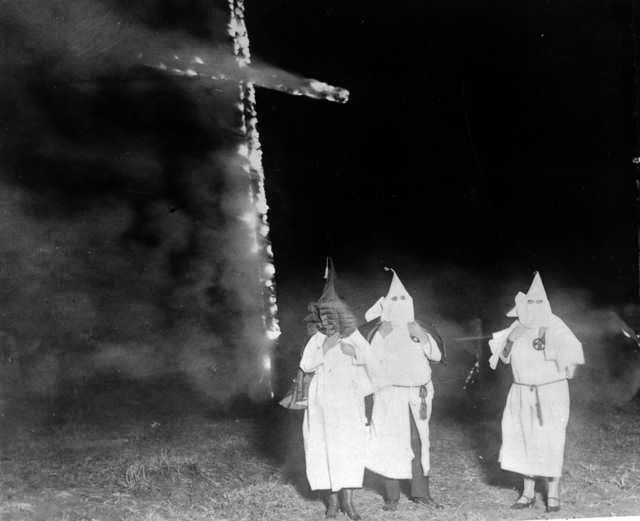
Is he kidding? "All while ascribing to what they say is Christian theology?" Jenkins uses the IRA of Northern Ireland as one example of "terrorism enacted in the name of Christ." That's ridiculous; the IRA was very much a political group, described as "a militant nationalist organization" by the Encyclopedia Britannica.5 There was no ascribing their actions as the proper outworking of Christian theology. Likewise, the Klu Klux Klan cannot claim any verse that tells them to burn crosses or hang people because of the color of their skin. In order to demonize Christianity, Jenkins simply tries to grab hold of anything that seeks to use the word "Christian" while violating both the core teachings of Christianity and the example set by its founder, Jesus Christ.

When looking at the foundation of Christianity, one sees that the followers of Jesus died for their faith, and even during those times of early persecution they didn't form an army against their persecutors. The inherent worth of all men including those with physical or mental defects comes from Christianity. The teachings of Jesus such as the Golden Rule, to go the extra mile, or to "turn the other cheek" are the best values for a civilized and gracious society. Jesus Himself did not conquer with an army, but gave himself as a sacrifice for others. If an individual's acts with intent to terrorize or kill, you no longer have Christianity. You have something else entirely.

In perpetrating intentional distortions such as these, Jenkins himself engages in a kind of journalistic terrorism, seeking to ghettoize the faithful followers of Jesus as some kind of threat. The public would be better served with the truth than misleading articles such as his.

References

1. Azumah, John A. "An Explanation of Islam's Relation to Terrorism and Violence." First Things. First Things, Jan. 2015. Web. 13 Jan. 2015. http://www.firstthings.com/article/2015/01/challenging-radical-islam.
2. Jenkins, Jack. "The Christian Terrorist Movement No One Wants To Talk About." ThinkProgress. ThinkProgress, 4 Dec. 2014. Web. 13 Jan. 2015. http://thinkprogress.org/justice/2014/12/04/3599271/austin-shooter-christian-extremism/.
3. Hoffberger, Chase, and Michael King. "Shooter Had ‘Hate in His Heart'" The Austin Chronicle. The Austin Chronicle Corp., 5 Dec. 2014. Web. 13 Jan. 2015. http://www.austinchronicle.com/news/2014-12-05/shooter-had-hate-in-his-heart/.
4. Jenkins., Think Progress, 2014.
5 "Irish Republican Army (IRA) | Irish Military Organization." Encyclopedia Britannica Online. Encyclopedia Britannica, n.d. Web. 12 Jan. 2015. http://www.britannica.com/EBchecked/topic/294148/Irish-Republican-Army-IRA.

Monday, January 12, 2015

Are you Ready to Argue Like Jesus?

Are you ready? Do you have what it takes? Are you prepared to argue? Christians today face more opposition to their beliefs than in the past. Those people are going to assert them to us. Therefore, we need heed the charge of the Apostle Peter who commanded that we always be ready to make a defense for our hope in the gospel (1 Pet. 3:15). One way to do this is to learn to argue well.


For many people, that last sentence sounds counter-intuitive. "Didn't your mother tell you it isn't nice to argue?" they may ask. Others think it's downright anti-Christian to argue. But, neither of these responses are true; and that's because when I use the word argument, I mean something different from what they're hearing. When I say the word "argument," I don't mean two people yelling at one another or hurting each other's feelings. I mean something completely different; and it has more to do with growing your understanding than raising your voice.

Why It's Impossible to Avoid an Argument

All people have beliefs. You can't be a functioning human being and not hold to at least some beliefs. Some of them are easily identified, such as "I'm alive right now" or "I'm reading this blog post." Others are a bit more complex, such as one's belief in the existence of God or which political party has better answers for his or her country, yet all these beliefs have some kind of reasoning behind them. It may be that you investigated the data or it may be that you were taught a belief from a young age. The authority figure or your study helped form your beliefs. There are a few beliefs that are self-presenting, like the belief that I am not in pain right now. I know I'm not feeling pain because pain experience is direct and immediate. However, most of our beliefs are formed through other means.

Because each one of us has beliefs, each one of us holds to certain things we believe are true about the world. A belief is simply that, something we take as true about the world. Those beliefs will also shape my actions and reactions to situations around me. If I believe in the power of prayer, that belief is going to play itself out in the action of my praying. If I believe that an unborn baby is made in the image of God, then that will shape my political views on abortion. Your beliefs will always spill out into your actions and touch the people and institutions you come in contact with.

There's the issue, though. Because different people hold different views about the world, it should be no surprise that you will run into people who don't believe things that you hold as true and they believe things you hold as false.  Such contacts mean two people will desire different outcomes to a specific situation, each believing that his or her outcome is the correct one. Just like two cars that are traveling in opposite directions arrive at a one-lane bridge simultaneously, both cannot go on their merry way until the conflicting desires are resolved.

Preparing to Argue Like Jesus

Because you, dear Christian, have reasons for your beliefs, and everyone will face beliefs that conflict with their own, it becomes crucial that you make sure you are better prepared to engage those conflicts. That requires you to learn to argue well. As I said at the top of this post, arguing doesn't mean yelling, fighting, or hurting someone's feelings. Arguing is simply discussing your beliefs with another person, but doing so by providing reason and evidence, or as Michael Palin defined it: "An argument is a connected series of statements intended to establish a proposition." It means we talk and support our belief with the reasons why we think that such a belief is true.

As I've been saying, this is exactly the way Jesus did it. The Gospel of Luke tells us that "The Child continued to grow and become strong, increasing in wisdom; and the grace of God was upon Him" (Luke 2:40). Jesus in his human nature grew in knowledge. He learned how to speak, and he learned the beliefs of his day. Jesus quoted the Scriptures – do you think he studied them? Do you think he worked at memorizing them? Do you think Jesus was a good student?  Did He study hard? He certainly seemed to know the beliefs of the Sadducees and the Pharisees as he put both to shame in Matthew 22.

I invite you to join me for the next few days as I lay out what well-structured arguments look like, and how you can make them. I also want to show what fallacies are, both to help you avoid them and to pick them out if your opponent should use them. Learn to argue more effectively; you will be following in the footsteps of Jesus.

Saturday, January 10, 2015

Apologetics is Foundational Since the Earliest Times of the Faith

It should be the goal of every Christian to reflect the heart of Jesus in his or her life. Yet, some in the church bristle at the idea of equipping themselves to defend the faith against ideas raised against it. They assume apologetics to be an intellectual game, where they would rather take the path of Jesus and model love. However, as I've shown, Jesus integrated apologetics into much of his ministry.

Here, Dr. Craig Hazen notes that the apologetics task has been exemplified in every ambassador who sought to introduce a lost world to the Creator. He writes:
It is very important to understand that in justifying the task of Christian apologetics throughout the history of the church, it was Jesus himself who set the stage. He did this not by writing apologetic tracts and treatises but by creating what I shall call here an "ethos of demonstration" among his followers. Jesus demonstrated the truth of his message and his identity over and over again using nearly every method at his disposal, including miracle, prophecy, godly style of life, authoritative teaching and reasoned argumentation' And although Jesus clearly authorized the apologetic ethos for his followers by living it out himself, it is also important to note that he did not create this approach ex nihilo during his three years of ministry. Indeed, Jesus was really just reaffirming an ages-old ethos of demonstration that had been well established in the Old Testament tradition. From the miracles of Moses in Pharaoh's court (Ex 7) to Elijah's contest with the prophets of Baal (1 Kings 18) to God himself calling for his opponents to "present your case ... set forth your arguments" (Is 41:21), a divine pattern was already fixed by the time Jesus came on the scene.1.
1. Hazen, Craig J. "Defending the Defense of the Faith." To Everyone an Answer: A Case for the Christian Worldview: Essays in Honor of Norman L. Geisler. Francis Beckwith, William Lane. Craig, and James Porter Moreland, Ed. Downers Grove, IL: InterVarsity, 2004. 37. Print.

Friday, January 09, 2015

Two More Arguments Against Homosexual Marriage

Many pundits are stating that 2015 will be the year the Supreme Court of the United States (SCOTUS)  will take up the question of homosexual marriage. With conflicting rulings from different federal courts of appeal, it seems more than likely. But SCOTUS doesn't have to rely on religious beliefs alone to understand why allowing homosexual marriage is a dangerous precedent for a society to set. Once can look at the behavior and the political issues that the concept of marriage involves to argue that protecting natural marriage is more beneficial to the citizens of the state than redefining marriage to any and all comers.


The Behavioral Question

I've previously written on biological and medical arguments against homosexual marriage that I believe are incredibly strong and demonstrate how natural marriage is more than just a way to share a life with someone you love. Yet people argue that individuals have the right to define marriage as they see fit. They share the opinion of Chip Arndt and Reichen Lehmkuhl, the self-proclaimed "married" homosexual couple who won CBS' game show The Amazing Race. Arndt noted the Oxford dictionary definition of marriage encompasses only a man and a woman. He then commented, "What's happening today, which has always happened through any revolution of culture, is that people redefine words. And we're basically saying-
Reichen: It's time to redefine.
Chip: It's time to redefine it."1

I've said before that heterosexual marriage is necessary to survival of a culture and how the concept of marriage as we now understand it is incompatible with same sex unions. What many don't realize is many in the homosexual community who do want to redefine marriage intend to change the concept well beyond the boundaries of which sexes are involved.

Even today, looking at homosexual couples who identify themselves as monogamous or committed, one finds a modification of those concepts. In the Australian and New Zealand Journal of Sociology, scientists studying homosexual relationships noted "Gay monogamous relationships are rarely faithful. 'Monogamous' seems to imply some primary emotional commitment, while causal sex continues on the side."2

Another study of homosexual partnerships was conducted by German "Sexologist" and homosexual Dr. Martin Dannecker. In 1991, Dannecker studied 900 homosexuals in 1991 living in what they defined as "steady relationships". However, Dannecker found that 83% of those males had numerous sexual encounters outside their partnerships over a one-year period. Dannecker then concluded that the "clear differences in the manner of sexual gratification" between single and non-single gay men were the reverse of what he expected. Of the homosexual men in steady relationships, he wrote, " the average number of homosexual contacts per person was 115 in the past year." In Contrast, single gay men had only 45 sexual contacts.3

Such a radical departure from the concept of two people entering into a lifetime commitment is both shocking and dangerous. Promiscuity is understood as a high-risk behavior carrying dire consequences, not the least of which are health related. In fact, an upscale homosexual men's magazine, Genre, surveyed 1037 readers in October of 1996. Here are some of the results: "One of the single largest groups in the gay community still experiencing an increase of HIV are supposedly monogamous couples." 52% have had sex in a public park. 45% have participated in three-way sex. 42% have had sex with more than 100 different partners and 16% claim between 40 to 100 partners.4

Of course there are those who want to do away with the concept of marriage being a union between two individuals altogether. In a Los Angeles Times article,  the head of the International Gay & Lesbian Human Rights Commission, Paula Ettelbrick, was interviewed and asked about her views on the same-sex marriage controversy. Ettelbrick, who is also a law professor, "recommends legalizing a wide variety of marriage alternatives, including polyamory, or group wedlock. An example could include a lesbian couple living with a sperm-donor father, or a network of men and women who share sexual relations."5 The article goes on to discuss how one of her goals, in Ettelbrick's words, is to "push the parameters of sex, sexuality and family, and in the process transform the very fabric of society."6 Such changes to the concept of marriage do nothing to alleviate the high-risk behavior in which homosexuals engage and, according to Dannecker's study, may actually enflame such behaviors.

The Political Question

Ultimately, it becomes important to understand why marriage is encouraged within the laws of the United States. As I've written before, the marriage relationship is seen as so necessary that "every human societ[y] has had to promote it actively".7  This means that the welfare of the society depends on the active encouragement of monogamous heterosexual unions. When understood this way, one can make a case that the U.S. constitution requires the definition of marriage to remain as it now stands.

First, we must understand that homosexuals are not being denied equal rights to marry whomever they want. The restrictions regarding marriage are enforced equally to both the heterosexual and homosexual population. For example, neither homosexuals nor heterosexuals can marry a sibling. In the same way, no one can marry someone of the same sex - that proscription applies to all citizens equally and is therefore not discriminatory.

So, why does the government restrict marriage at all? The opening paragraph of the U.S. Constitution is known as the Preamble, and it sets forth the overarching principles of what the document is designed to accomplish. It reads "We, the People of the United States of America, in order to form a more perfect union, establish justice and ensure domestic tranquility, provide for the common defense, promote the general welfare and secure the blessings of liberty to ourselves and our posterity do ordain and establish this constitution of the United States of America."8

Note that the writers explicitly state its purpose is to promote the general welfare for the people of the United States and their posterity. But I've demonstrated that homosexual marriage is in conflict with this. It wouldn't promote the general welfare of the society - it would hinder that process! Therefore, it does not make sense to say homosexual marriage is a constitutional freedom. How can we usurp this foundational intent of the framers that's explicitly stated in the constitution itself with something that is nowhere mentioned as a right?

Philosopher Francis Beckwith, in his article "Wedding Bell Blues; Understanding the Same-Sex Marriage Debate" sums it up thusly, "Since marriage is an intrinsic good, just as justice is an intrinsic good, a culture that does not nourish, encourage, and protect traditional marriage will do so at its own peril, just as it would imperil itself if it no longer understood justice as an intrinsic good. … Republican (small "r") government results from good citizens civilized by the institutions of family, honest work, and good religion. If, to quote Aristotle, statecraft is soulcraft, then the end of the state should be to produce good citizens and therefore provide a privileged and protected position for these institutions. The state, consequently, should treat traditional marriage as privileged and protected in contrast to other alternatives."9

Beckwith states that the purpose of government really defines its role regarding marriage. If the state is interested in making good citizens and promoting the good, then marriage must be protected as a heterosexual union. He continues "On the other hand, a state that treats all alternative lifestyles as equal does not believe that statecraft is soulcraft and is therefore not particularly interested in producing good citizens qualified to engage in republican government. Such a state denies there is any such thing as the good, the true, or the beautiful."10  The founding fathers have demonstrated that the government of the United States was formed for a higher purpose, that qualities such as establishing justice, promoting the welfare of the people and ensuring that their posterity also enjoyed those assurances. Since homosexual marriage endangers society in real ways and is antithetical to those ends it cannot be considered constitutionally protected. It does, in fact, undermine the intent of the constitution itself.

References:

1.Advocate.com Editors. "Married and Millionaires-amazing!" Advocate.com. Here Media, Inc., 21 Aug. 2003. Web. 09 Jan. 2015. http://www.advocate.com/news/2003/08/22/married-and-millionaires%E2%80%94amazing-0?page=0%2C1.
2. Connell, RW. Crawford, J., Dowsett, GW., Kippax, S., Sinnott, V., Rodden, P., Berg, R., Baxter, D., Waston, L., "Danger and context: unsafe anal sexual practice among homosexual and bisexual men in the AIDS crisis" Australian and New Zealand Journal of Sociology (1990 ) 26: pp.187-208.
3. Wittmeier, Carmen. "Now They Know The Other Half." Alberta Report 7 June 1999: 27. Print.
4. "Sex Survey Results," Genre (October 1996), quoted in "Survey Finds 40 percent of Gay Men Have Had More Than 40 Sex Partners," Lambda Report, January 1998, 20. Print.
5. Rivenburg, Roy "Divided over Gay Marriage" Los Angeles Times 12 March 2004. E1. Print.
6. Ibid.
7. Young, Katherine K. and Paul Nathanson "Marriage a la mode: Answering the Advocates of Gay Marriage"
http://www.marriageinstitute.ca/images/mmmode.pdf Sept. 29, 2003
8. The United States Constitution
9. Beckwith, Francis J. "Wedding Bell Blues: Understanding the Same-Sex Marriage Debate - Christian Research Institute." Equip.org. Christian Research Institute, 22 Apr. 2009. Web. 09 Jan. 2015. http://www.equip.org/article/wedding-bell-blues-understanding-the-same-sex-marriage-debate/.
10. Ibid.

Thursday, January 08, 2015

What Islam Really Teaches About Images of Muhammad

The world is in shock at the grave tragedy in which twelve people were gunned down at Charlie Hebdo by Muslim extremists. The French satirical newspaper had published several cartoon caricatures of the Islamic prophet Muhammad over the years, many of them placing the prophet in scandalous or obscene positions.


Islamic activist and Sharia law lecturer Anjem Choudary seemed to justify the attack in a USAToday Opposing Views piece where he said that freedom of expression "comes with responsibilities" and explained that "the potential consequences of insulting the Messenger Muhammad are known to Muslims and non-Muslims alike."1 He seems to place the emphasis on the satirical aspect of the portrayals rather than the fact that these were images of Muhammad. However, it's being reported that any depiction of Muhammad is banned in Islam. A CNN report entitled "Why Islam forbids images of Mohammed" wrote that "The prohibition again illustrating the Prophet Mohammed began as an attempt to ward off idol worship." They also note the prohibition extends to other prophets and noted that "some Muslim countries banned the films Noah and Exodus this year because their leading characters were Hebrew prophets."2

But that's not quite what Islam teaches.

No Images of Any Living Creature

To be clear, there is no prohibition whatsoever against images of the prophets in the Qur'an. The closest one gets is Sura 21:52 where Abraham rebukes the idol worship of his people with the question "What are these statues to which you are devoted?"3 However, it isn't only the Qur'an that informs the religion of Muslims. Muslims must also rely on the traditions of Muhammad, as recorded in a series of books known as the Hadith. There are different Hadith for different factions of Muslims, but most Muslims are Sunni by far and their Hadith bans not simply depictions of Muhammad or the prophets, but any visual representation of any person or animal is forbidden!

One such Hadith has Muhammad rebuking a woman who purchased a pillow for him to recline upon because it had images of people on it:
Narrated ‘Aisha: (the wife of the Prophet)

I bought a cushion having pictures on it. When Allah's Apostle saw it, he stopped at the gate and did not enter. I noticed the signs of hatred (for that) on his face! I said, "O Allah's Apostle! I turn to Allah and His Apostle in repentance! What sin have I committed?" He said, "What about this cushion?" I said, ‘I bought it for you to sit on and recline on." Allah's Apostle said, "The makers of these pictures will be punished (severely) on the Day of Resurrection and it will be said to them, ‘Make alive what you have created.'" He added, "Angels do not enter a house in which there are pictures." (Sahih Bukhari, Book 72, Number 844)4
Another Hadith has Muhammad stating, ""Angels do not enter a house in which there is a dog or there are pictures." (Sahih Bukhari, Book 72, Number 833)5 According to an article on Answering-Islam.com, Muslim scholars both ancient and recent have concluded that anyone making depictions of living creatures will be required by Allah to breathe life into them on the Day of Resurrection. When one cannot, that person will be punished for idolatry. 6 The article goes on to state that: "'No pictures' includes no photos (still or moving). ‘No pictures' might reduce idolatry, but the reason given is not that, but that Allah will torment all who have made pictures" and "No pictures in the home includes no television in the home."7

The prohibition on images in Islam is wide and sweeping. The Answering-Islam article notes that for some reason while images on a pillow are banned, Muhammad didn't have a problem with little girls playing with dolls.8 This makes little sense as the doll makers are certainly doing the same thing as sculptors or pillow manufacturers. Also, most Muslims today don't seem to ban television or cameras from their homes.

The ban on images is simply one more way to underscore the fragmented nature of the teachings of Islam. The press misunderstands the ban and in some ways helps justify the offense in the eyes of the west by limiting it to some kind of attack only on the holiest figures of the Islamic faith. That is a misrepresentation, since even a harmless depiction of an anonymous individual is not allowed. Choudary allowed the USAToday web site to publish his Op-Ed with images of people accompanying the piece. He also has his own web site that shows his picture.  Such actions show the hypocrisy of his stance.

References

1. Choudary, Anjem. "People Know the Consequences: Opposing View." USA Today. Gannett, 08 Jan. 2015. Web. 08 Jan. 2015. http://www.usatoday.com/story/opinion/2015/01/07/islam-allah-muslims-shariah-anjem-choudary-editorials-debates/21417461/.
2. Burke, Daniel. "Why Islam Forbids Images of Mohammed." CNN. Cable News Network, 8 Jan. 2015. Web. 08 Jan. 2015. http://edition.cnn.com/2015/01/07/living/islam-prophet-images/index.html.
3. "Surat Al-'Anbyā' (The Prophets) - سورة الأنبياء." Qur'an.com. Qur'an.com, n.d. Web. 08 Jan. 2015. http://quran.com/21/52.
4. Hadith, Sahih al-Bukhari, Book 72, Number 844. Center for Muslim-Jewish Engagement. University of Southern California, n.d. Web. 08 Jan. 2015. http://www.usc.edu/org/cmje/religious-texts/hadith/bukhari/072-sbt.php#007.072.844 .
5. Hadith, Sahih al-Bukhari, Book 72, Number 833. Center for Muslim-Jewish Engagement. University of Southern California, n.d. Web. 08 Jan. 2015. http://www.usc.edu/org/cmje/religious-texts/hadith/bukhari/072-sbt.php#007.072.833 .
6. "Are Pictures of Muhammad Really Forbidden In Islam?" Answering Islam. Answering Islam, n.d. Web. 08 Jan. 2015. http://www.answering-islam.org/Muhammad/pictures.html.
7. Answering Islam, Ibid.
8. Answering Islam, Ibid.

Wednesday, January 07, 2015

What's Wrong with Just Telling Boys "Don't Slap Girls"

Boys don't want to slap girls. At least that's what the popular YouTube video entitled "'Slap her': Children's reactions" shows. Produced in Italy, the short clip shows several boys aged 10 to 11 in front of a young girl where they dutifully perform requests such as "make a funny face" or "caress her" from an off- camera voice. However, when each is told "slap her", none comply. When asked why they won't slap her one says, "Because you're not supposed to hit girls!" while another replies "I don't want to hurt her."1


I applaud the boys for not hitting the girl. It's decent; and I've given the same instruction to my boys. However, I worry that the video doesn't prove what it sets out to. In fact, I think that the underlying assumption is more problematic than meets the eye.


The video has been promoted as a demonstration that violence against women is wrong. ABC News's San Francisco affiliate wrote "Italian media company fanpage.it created the video to show how both violence and pacifism can be taught at an early age."2 But what does it show? Of course, pre-pubescent boys after being instructed to tell a girl how pretty she is and to stroke her don't then follow instructions to slap her. Is that a surprise?

Juxtapose this to this is the famous Milgram experiments. These are well-known experiments in psychology where people believed they were administering electric shocks to participants (really actors pretending to hurt) and when commanded, they would obey authorities even to the point of sending a shock that could be fatal.3 While Milgram's experiment had some flaws, a more recent iteration proved that people were more than willing to obey an authority who told them to provide a painful electric shock to a stranger. The study found "People who were normally friendly followed orders because they didn't want to upset others, while those who were described as unfriendly stuck up for themselves."4

Commands in Isolation are Not Beneficial

I think both findings show the flaw in moral commands that are not grounded in a larger worldview. The Italian video may be trying to say that young children don't want to slap girls by nature, but that isn't necessarily true. Kids who know and disagree with one another will get into fights all the time, and unless specifically instructed by a parent, may slap someone of the opposite sex. Also, they obviously are taken with the pretty girl and hitting her wouldn't make sense. But Milgram-type experiments do show that some people are more than willing to inflict pain when ordered to do so.

The kids seemed to understand that hitting a girl is wrong because boys are stronger than girls and could do more damage to them. Men do have significantly more muscle mass than women, leaving women much more vulnerable in a confrontation between individuals of opposite sexes. Yet, in today's "biology doesn't matter" culture, we're told the differences between the sexes don't matter, except when they do.

Morality Rooted in Worldview

More broadly, what our kids require is not simple rules, but an understanding of the value of human beings and why men shouldn't hit women. The Christian world view teaches that anyone who is in a position of strength—be it physical, financial, or influential—should not use that position to take advantage of another person made in the image of God. It is through Christianity that we understand the equality of all people and it gives us good reasons for acting civilly towards one another. In fact, such an approach also tells us that women are as valuable as men in our society and therefore should be held in high regard.  But when right and wrong are reduced to whatever the adult or some authority figure says, people may be manipulated to do horrendous things, as Hitler's Germany has proven.

I don't know if the kids in the video understood the full moral grounding of why we shouldn't hit a girl. In the video, one boy responded that "Jesus doesn't want us to hit others," which isn't a bad answer. But as parents, we need to teach our children not simply what to do and not do, but how all of that relates to the larger picture of God and man. Once that foundation is established, individuals are less likely to be swayed, and are better equipped to weigh their actions in a variety of contexts, making better decisions even in unforeseeable situation. Isn't that how we want to rear our children?

References

1. "Slap Her": Children's Reactions. Prod. Fanpage.it. YouTube. YouTube, 4 Jan. 2015. Web. 07 Jan. 2015. https://www.youtube.com/watch?v=b2OcKQ_mbiQa.
2. "VIDEO: Young Boys Asked to Slap Little Girl in Social Experiment." ABC7 San Francisco. ABC, Inc., 5 Jan. 2015. Web. 07 Jan. 2015. http://abc7news.com/society/video-young-boys-asked-to-slap-little-girl-in-social-experiment/462246/ .
3. McLeod, Sam. "Milgram Experiment." Simply Psychology. Simply Psychology, 2007. Web. 06 Jan. 2015. http://www.simplypsychology.org/milgram.html.
4. Shim, Eileen. "Psychologists Have Uncovered a Troubling Feature of People Who Seem Nice All the Time." Mic. Mic Network, Inc., 30 June 2014. Web. 07 Jan. 2015. http://mic.com/articles/92479/psychologists-have-uncovered-a-troubling-feature-of-people-who-seem-nice-all-the-time.

Come Reason brandmark Convincing Christianity
An invaluable addition to the realm of Christian apologetics

Mary Jo Sharp:

"Lenny Esposito's work at Come Reason Ministries is an invaluable addition to the realm of Christian apologetics. He is as knowledgeable as he is gracious. I highly recommend booking Lenny as a speaker for your next conference or workshop!"
Check out more X